
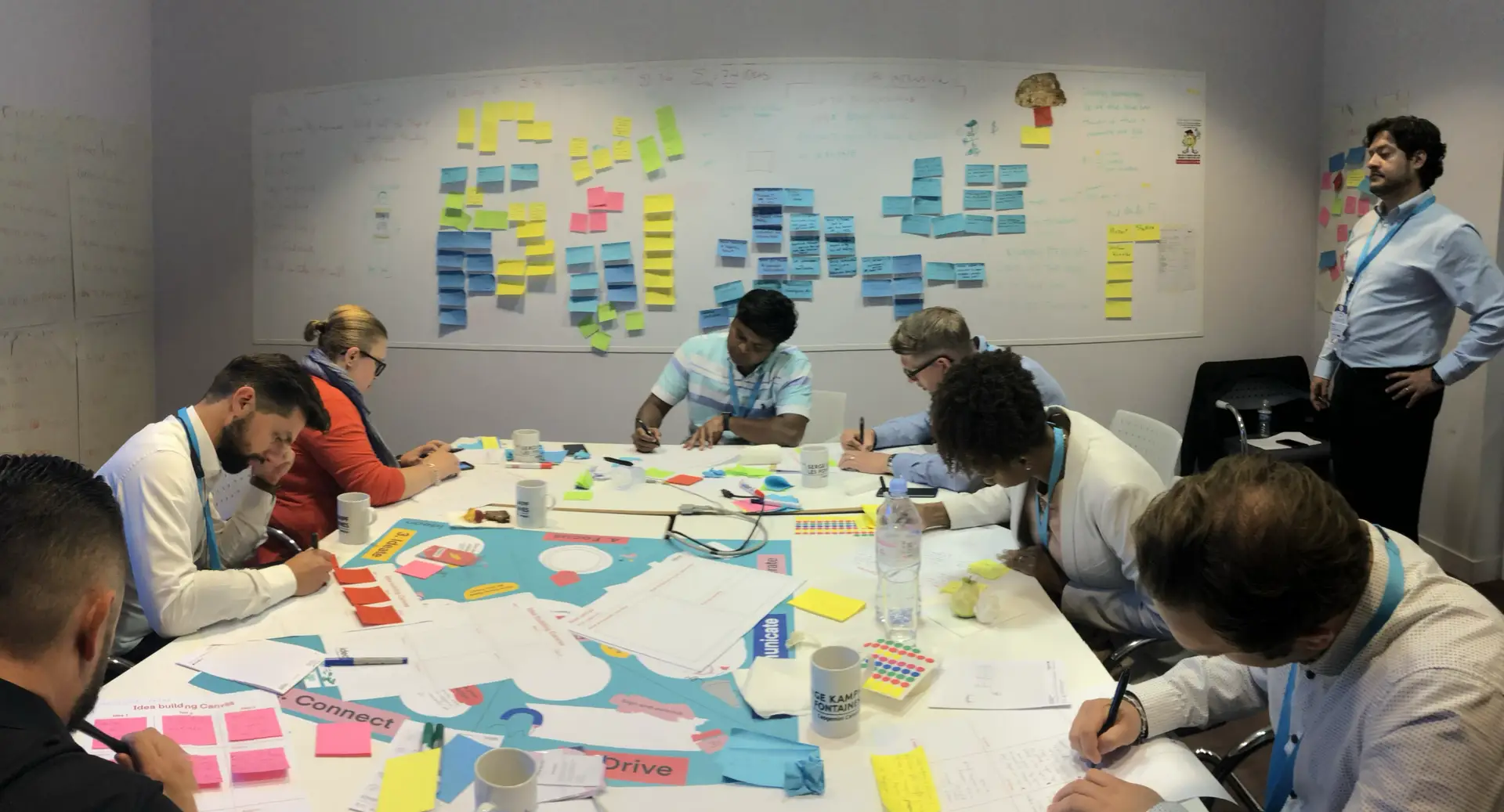
Over the past couple of years, I’ve been working inside a large government transformation program, helping shape future services, customer journeys, business requirements and the transition from fragmented legacy processes into a more unified digital environment.
It reinforced something I’ve believed for a long time: government transformation has enormous potential, but it is also uniquely difficult.
When it works, it can simplify services for thousands or even millions of people, reduce administrative effort, improve safety and compliance, give staff better tools, and create services that feel far more connected than the organisational structures behind them.
When it doesn’t, transformation can become a very expensive exercise in replacing technology while leaving the underlying problems largely untouched.
The opportunity is significant
Government organisations often operate with a complex mix of legislation, policy, legacy technology, manual processes, duplicated data and organisational structures that have evolved over many years.
That creates friction for customers and staff alike.
A single service can cross multiple teams, systems and agencies. Customers may have to provide the same information more than once. Staff may need to move between systems or manually verify information that already exists elsewhere in government.
Transformation creates an opportunity to rethink that.
In the work I’ve been involved in, this meant looking beyond individual screens or transactions and considering the whole service: identity, applications, payments, evidence, assessment, compliance, notifications, ongoing management and the work performed by frontline and back-office teams.
Done well, this kind of transformation can create much more than a new digital platform. It can create a simpler service model.
But government transformation is hard for a reason
There is often a perception that government transformation moves slowly because government is resistant to change.
The reality is more complicated.
Government services operate within legislation, regulation, privacy obligations, security requirements, procurement rules, accessibility standards and public accountability that private organisations do not always face to the same degree.
Those controls exist for good reasons.
The challenge comes when governance designed to manage risk starts creating another kind of risk: slow decision-making, fragmented ownership and an inability to adapt as new information emerges.
I have seen relatively straightforward service questions become difficult because the answer sits across policy, legal, operations, technology, architecture and customer experience.
None of those perspectives is wrong.
The problem occurs when there is no effective mechanism for bringing them together and making a decision.
Transformation then becomes less about solving problems and more about navigating the organisation.
Replacing a system is not the same as transforming a service
One of the biggest traps is allowing a transformation program to become primarily a technology implementation.
A new CRM, portal or workflow platform can provide enormous value. But if the underlying service has not been reconsidered, the organisation can simply recreate old processes in new technology.
You end up digitising complexity rather than removing it.
The more useful questions are often:
Why do we ask for this information?
Who actually needs it?
Does another part of government already hold it?
Which decisions genuinely require human judgement?
What could be automated?
What should the customer be able to do themselves?
Where are staff compensating for poor systems or unclear policy?
And, perhaps most importantly, what outcome are we actually trying to achieve?
These questions sit between service design, product, business analysis, architecture, policy and operational design. Transformation works best when those disciplines operate together rather than sequentially.
The tension between ambition and pragmatism
Government programs also have to deal with a constant tension between the ideal future state and what can realistically be delivered.
Funding is limited. Timelines are fixed. Legacy systems cannot always disappear immediately. Procurement constrains choices. Some integrations are unavailable. Policy may not be ready to change.
That does not mean organisations should abandon ambition.
It means transformation needs a clear direction combined with pragmatic delivery.
I often think of this as designing at two levels.
At the strategic level, you need a clear view of the future service, the principles guiding it and the outcomes you want to create.
At the delivery level, you need to continually ask: what is the smallest meaningful change we can make now that moves us toward that future?
Without the first, delivery becomes incremental without direction.
Without the second, transformation becomes an ambitious vision that never quite reaches customers.
What makes government transformation successful?
From my experience, several things matter far more than the choice of technology.
A shared definition of the outcome
Programs need clarity on what success actually means. Not simply “implement the platform”, but improvements such as reduced processing time, fewer customer contacts, better compliance outcomes, increased digital completion, less manual handling or greater staff capacity.
Clear decision ownership
Transformation slows dramatically when everyone can contribute to a decision but nobody owns it. Decision rights need to be explicit, and unresolved questions need visible owners and timeframes.
Designing the whole service
Customer experience cannot be separated from operational experience. A beautifully designed portal can still create additional work behind the scenes. Frontstage and backstage processes need to be designed together.
Genuine multidisciplinary working
Product, service design, business analysis, architecture, engineering, policy, legal, operations and frontline staff need to work on problems together. Handing work from one discipline to another usually creates gaps and rework.
Customer and staff evidence
Assumptions become embedded very quickly in large programs. Research, service data, staff knowledge and testing provide a way of challenging those assumptions before they become expensive.
The discipline to simplify
Every exception, additional field, workflow step and custom feature adds complexity. Successful transformation requires organisations to continually ask whether complexity is genuinely required or simply inherited.
Leadership that enables change
Transformation creates uncertainty. Teams need leaders who can make decisions, remove obstacles, encourage challenge and create enough psychological safety for people to say when something is not working.
This may be the most important factor of all.
Transformation is ultimately about people
Technology matters. Architecture matters. Governance matters. Procurement matters.
But transformation succeeds or fails through people.
It depends on whether teams understand the purpose of the change, whether leaders are willing to make difficult decisions, whether staff closest to the service are listened to, and whether customers are treated as participants in the design rather than recipients of whatever is eventually delivered.
Government has an extraordinary opportunity to create better, simpler and more connected services.
The organisations that succeed will not necessarily be those that buy the most sophisticated technology.
They will be the ones that combine technology with service design, operational change, clear decision-making and leadership that understands transformation as an organisational capability rather than an IT project.
That is where the real value is created.