
Product and Service Design
Boating Vic
Using service and behavioural design to improve water-safety decisions
A mobile safety service bringing fragmented weather, ramp and local information together at the moments boaters and paddlers make decisions.
Selected project evidence
The work behind the outcome.
Research, journeys, prototypes and delivered outputs selected to show how the project moved from evidence to decision and delivery.
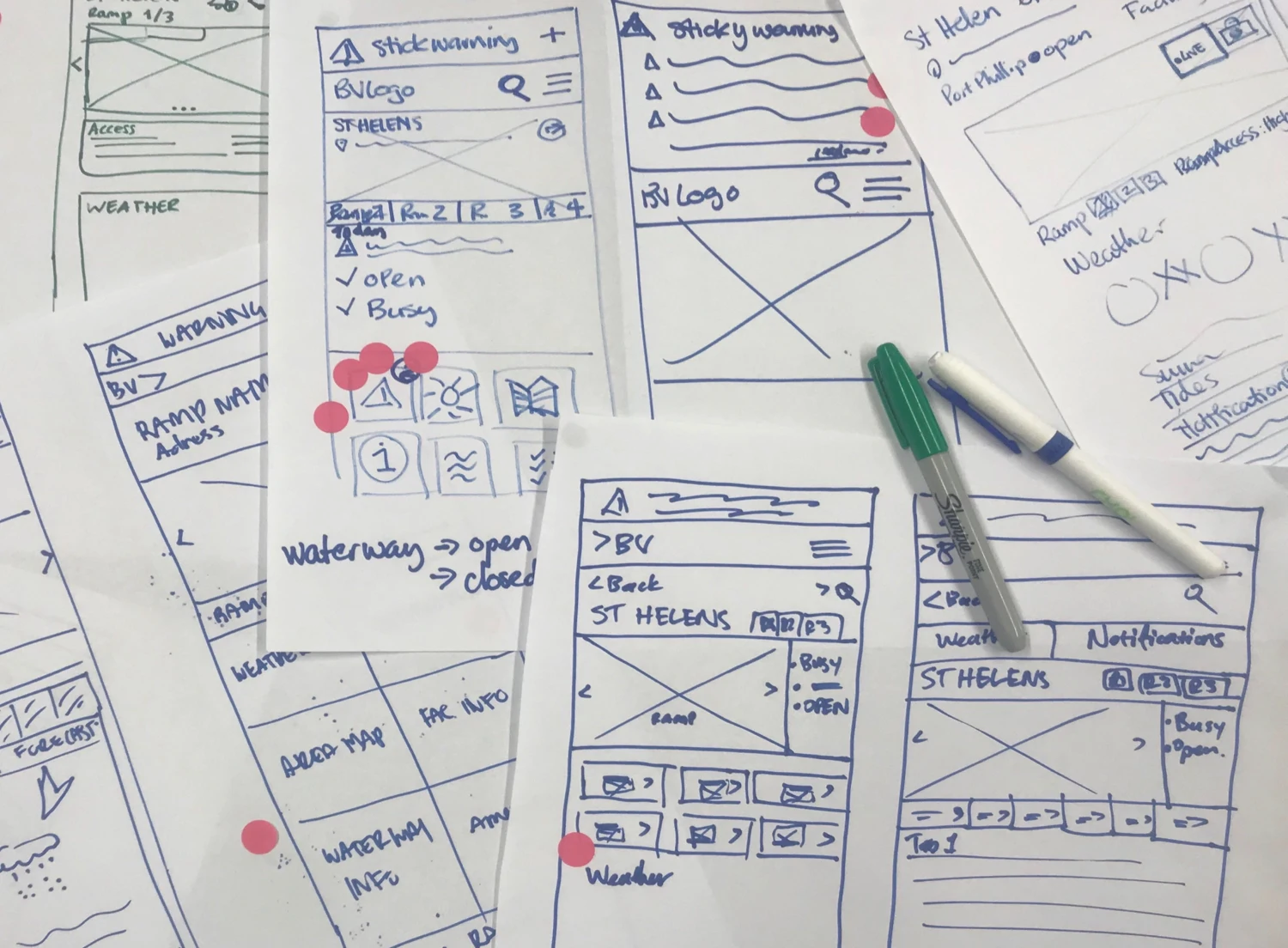
Paper sketches used to test information hierarchy, ramp status, weather, warnings and facility information.
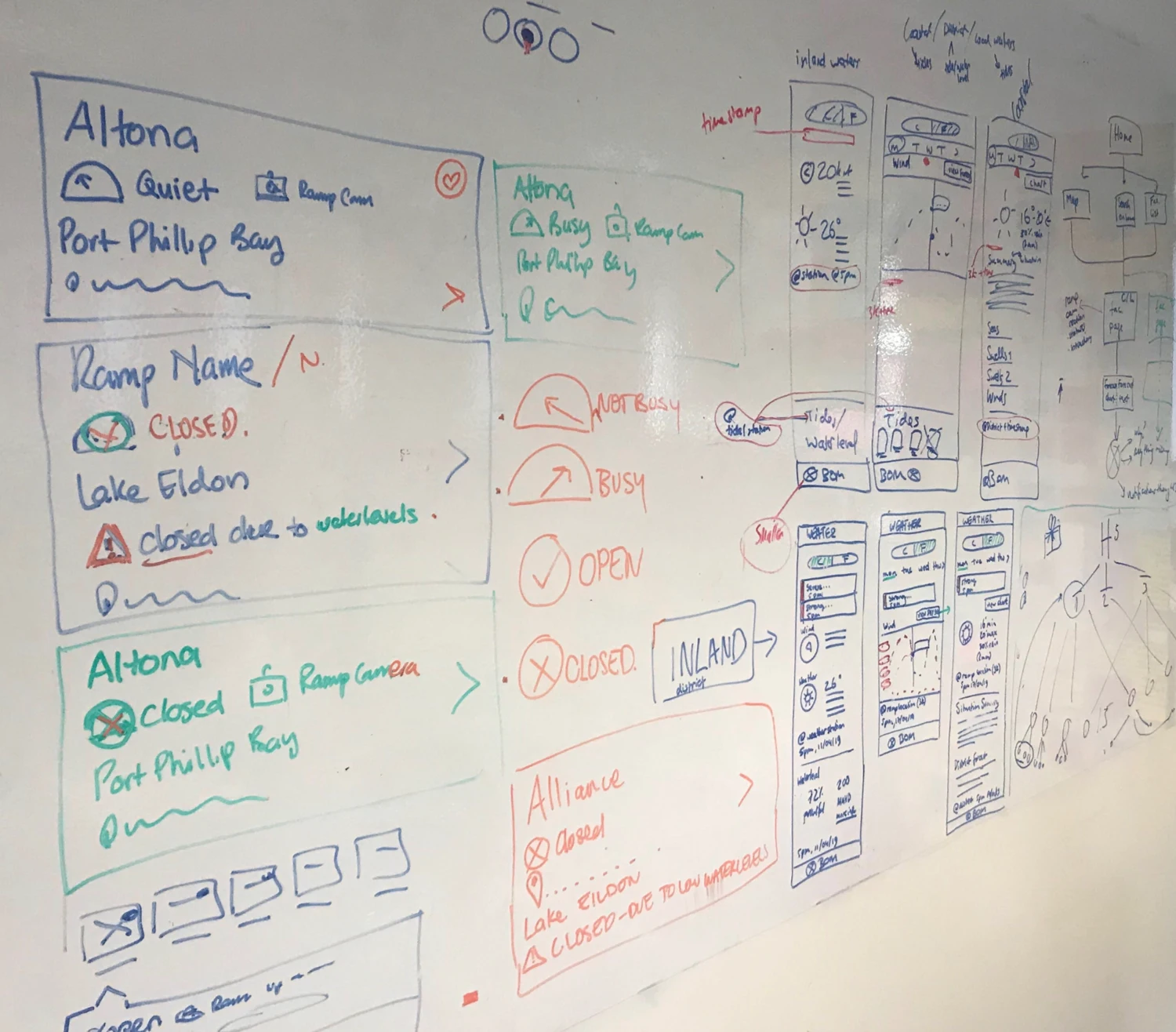
Whiteboard working connected ramp status, weather, safety information and navigation before moving into higher fidelity.
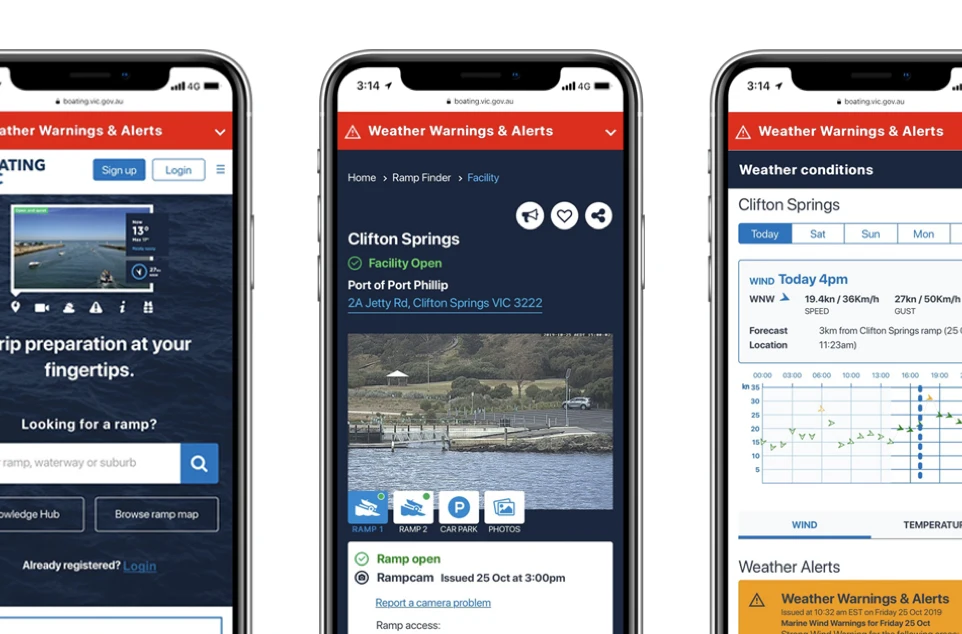
Final screen designs brought trip preparation, ramp conditions, weather and warning information into one coherent mobile service.
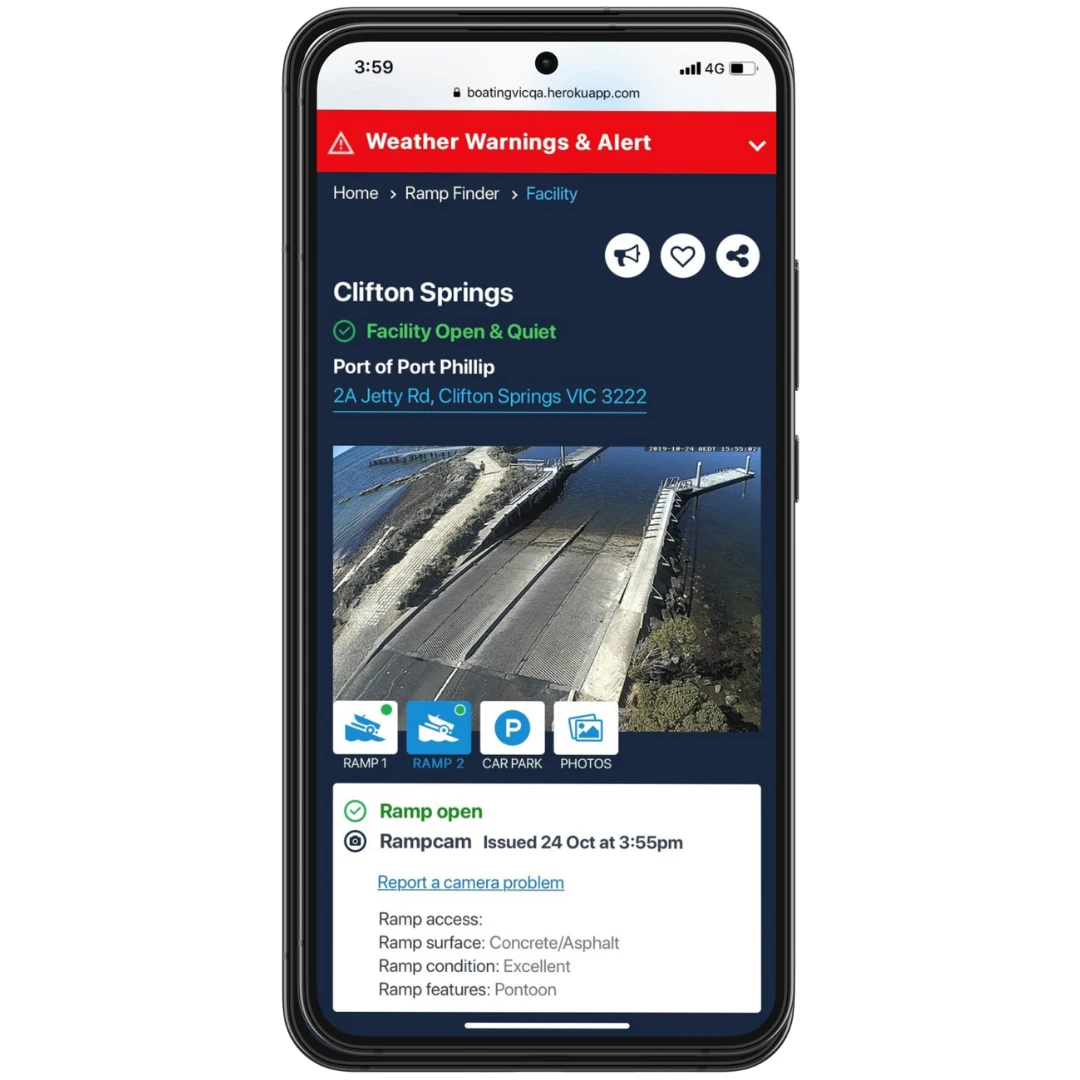
A focused ramp view combined live conditions, ramp-camera imagery, access information and facility status in one place.
The opportunity
A mobile safety service bringing fragmented weather, ramp and local information together at the moments boaters and paddlers make decisions.
My contribution
I led strategy, customer research, journey design, behavioural framing, feature prioritisation, prototyping and design through delivery.
Context and challenge
Safety information existed across weather services, websites, ramp information and education campaigns, but users had to combine those sources themselves. Conditions could also change after a person had completed their initial pre-trip check.
The opportunity was to make safety information more relevant, timely and actionable. A design-led discovery examined the full planning and on-water journey before narrowing the product into a focused MVP.
My role
- Defined the experience vision and led recreational-user research.
- Mapped trip-planning and on-water decision journeys.
- Facilitated stakeholder and co-design workshops.
- Developed behavioural opportunities and user archetypes.
- Prioritised features against user value and feasibility.
- Led prototyping, usability testing, agile design and QA.
Strategic and service design response
Design around moments of decision
The service was organised around questions users actually ask: where should I launch, are conditions suitable, what has changed, is this ramp usable, and do I need to alter or cancel my trip?
Bring fragmented information together
Weather, ramp, location and safety information were brought into one coherent service rather than requiring users to construct their own view.
Use behavioural design
Safety prompts were embedded at relevant moments so the service could influence decisions rather than simply provide a library of safety content.
Design for the real environment
Testing considered bright outdoor conditions, mobile use, low connectivity, time pressure and different levels of boating experience.
Outcome and impact
- 8,500+ downloads in the first three months.
- 4,000+ user accounts created.
- 323,000+ early page views.
- 87% of surveyed users reported that the service influenced trip decisions.
- Live information was consolidated across more than 500 ramps.
Why it matters
The service worked because it was designed as a behaviour-change intervention, not simply an information product. It brought the right information closer to the moment a safety decision was being made.