Strategic Design
CRM Readiness
De-risking CRM investment through human-centred discovery
A reusable CRM-readiness approach offered across Salesforce and Microsoft Dynamics engagements, designed to make user needs, processes, governance and adoption visible before organisations committed to detailed platform design.
Selected project evidence
The work behind the outcome.
Research, journeys, prototypes and delivered outputs selected to show how the project moved from evidence to decision and delivery.
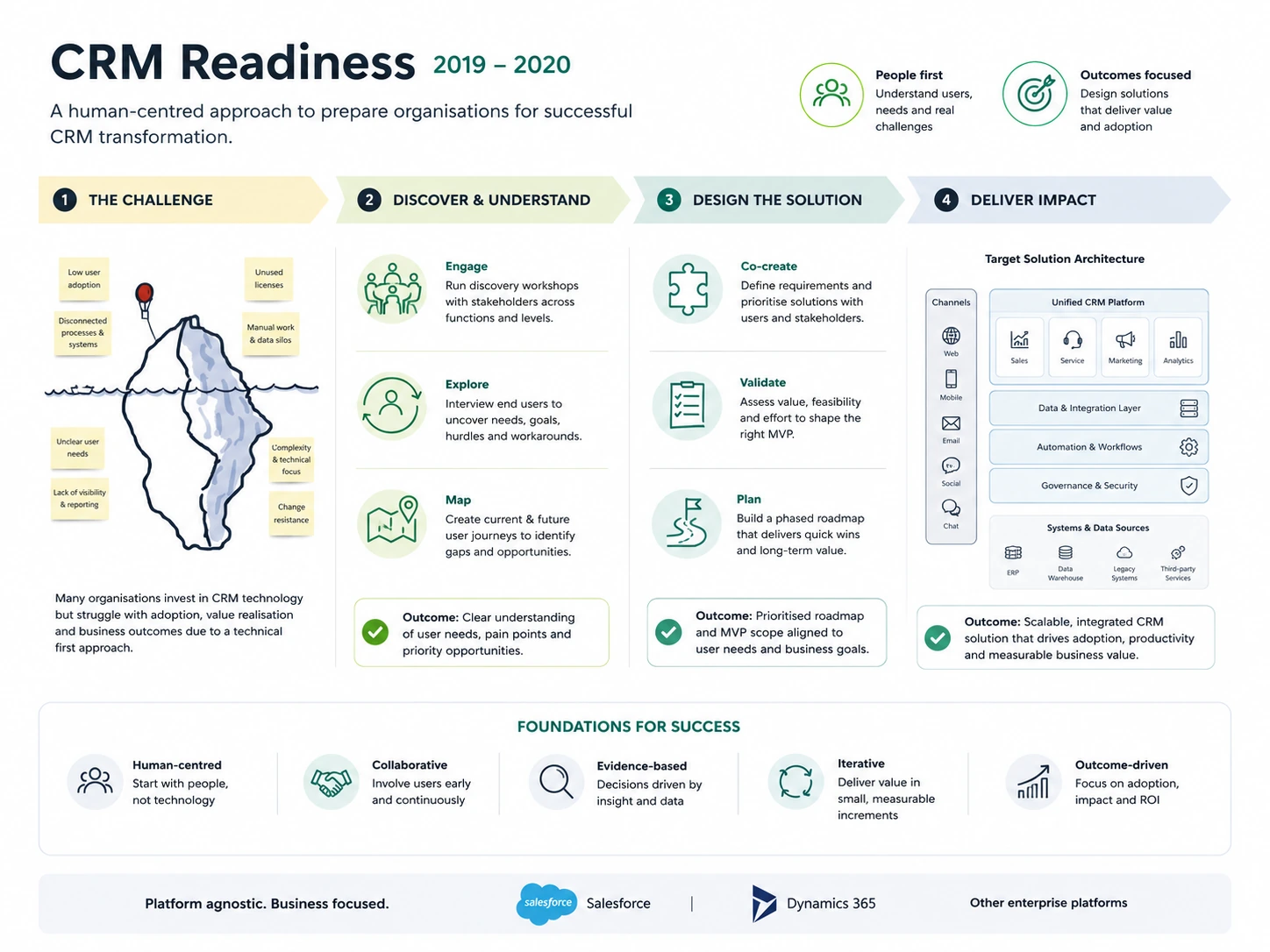
A platform-neutral readiness model connects user needs, customer knowledge, governance, process and adoption before technology configuration begins.
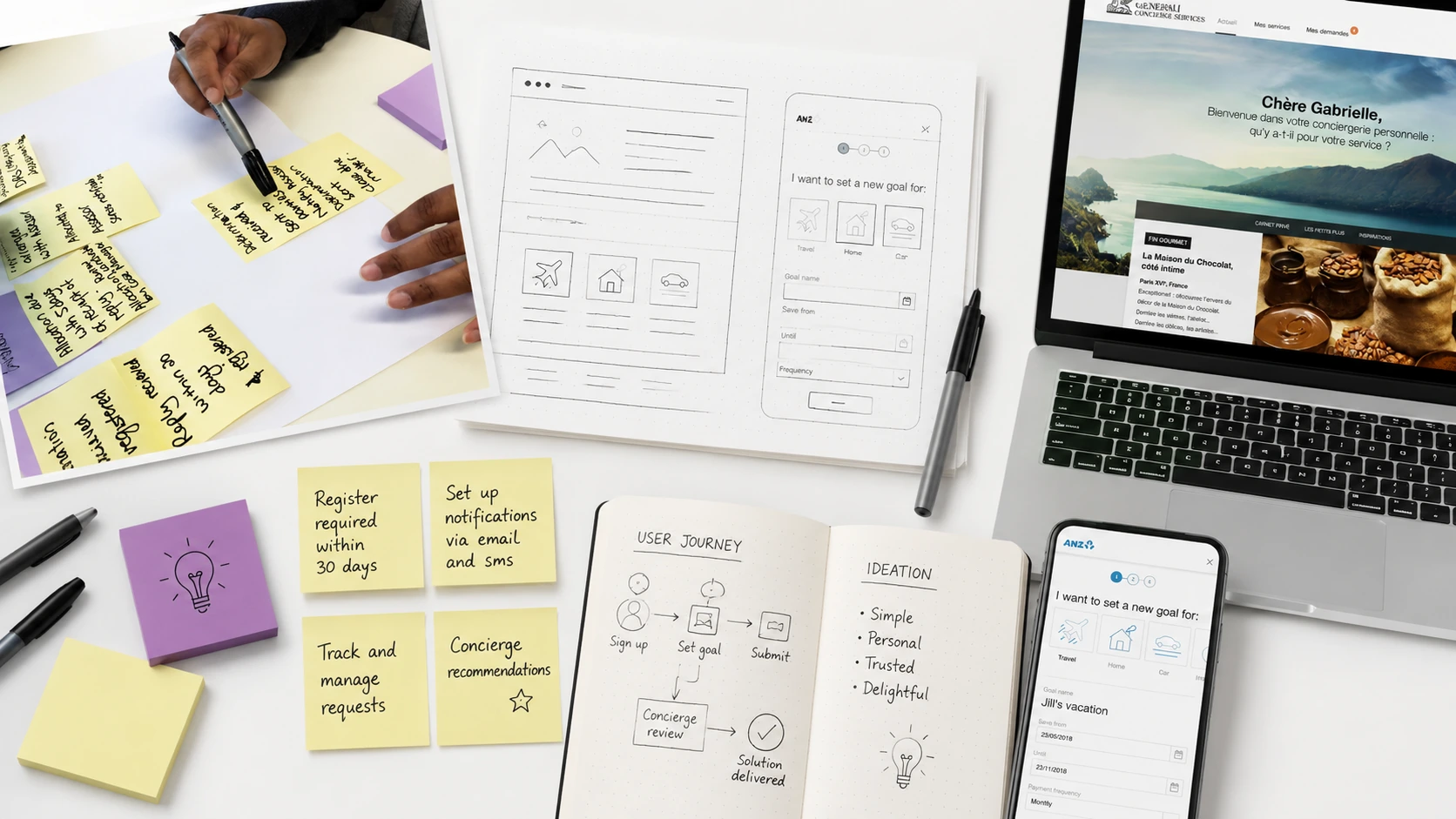
Workshop activity surfaced business requirements, user pain points, fragmented tools and information needs before the team committed to a CRM solution.
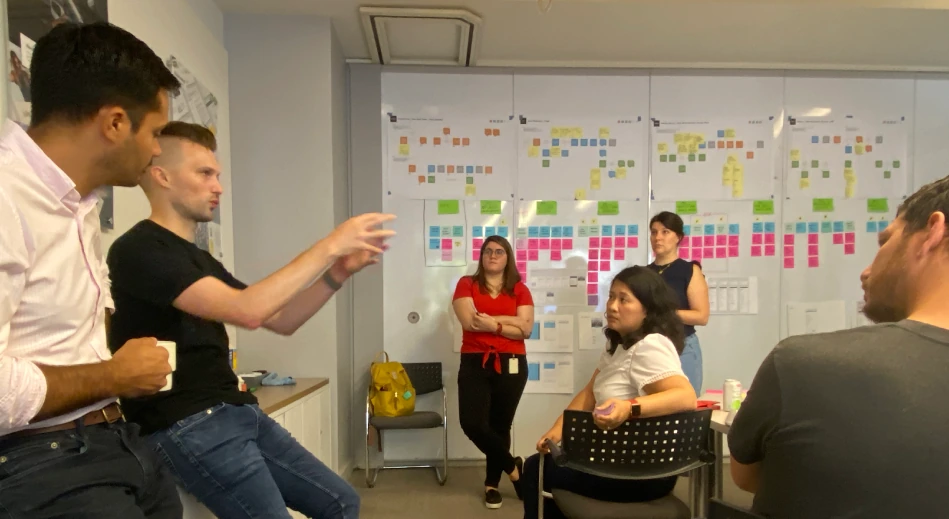
Journey mapping helped teams understand how people actually worked, where information broke down and what the future experience needed to support.
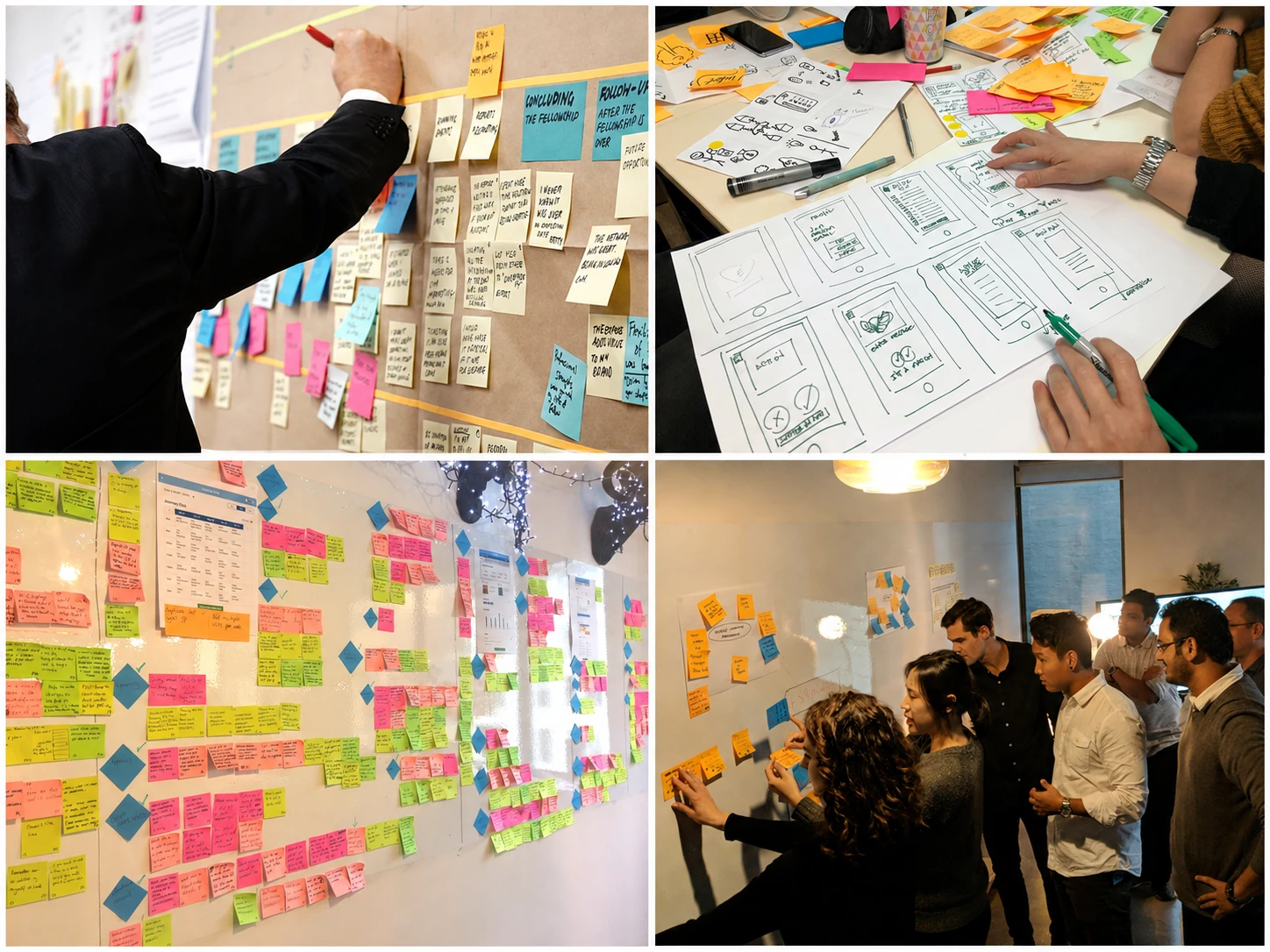
Collaborative synthesis and prioritisation turned user and business needs into an MVP, release roadmap and a clearer basis for platform investment decisions.
The opportunity
A reusable CRM-readiness approach offered across Salesforce and Microsoft Dynamics engagements, designed to make user needs, processes, governance and adoption visible before organisations committed to detailed platform design.
My contribution
I helped shape and apply a human-centred CRM readiness method combining stakeholder discovery, user research, current and future journeys, platform health checks and MVP prioritisation.
Context and challenge
CRM programs often begin with the platform and work backwards. In the engagements this readiness offer was designed for, teams were frequently relying on spreadsheets, disconnected systems and individual workarounds while customer information was fragmented across the organisation.
The result was familiar: no reliable single view of the customer, limited access to useful information on the go, duplicated or poor-quality data, inconsistent processes and a high risk that a technically successful CRM implementation would still be poorly adopted.
My role
- Helped define a reusable, human-centred CRM readiness approach.
- Ran stakeholder discovery workshops to clarify business requirements and project direction.
- Interviewed users across teams to understand goals, tasks, information needs and workarounds.
- Mapped current and future journeys for the users in scope.
- Combined user evidence with platform health-check criteria.
- Prioritised requirements into an MVP and future release roadmap.
- Worked with Salesforce and Microsoft Dynamics specialists to connect experience needs with feasible platform direction.
Strategic and service design response
Design the right solution before designing the solution right
The readiness phase deliberately came before detailed CRM configuration. It created space to understand what people were trying to achieve, how work actually happened and where information or process breakdowns were creating friction.
Connect user needs with platform health
User research was combined with a structured view of data, governance, process and platform capability. This prevented either perspective from dominating and helped distinguish genuine business needs from inherited system behaviour.
Use journeys to explain the value of change
Current and future journeys made the opportunity visible to stakeholders. Rather than discuss CRM as a collection of features, teams could see how a better customer view, clearer process and better access to information would change the day-to-day experience.
Prioritise an MVP with room to scale
Requirements were refined with stakeholders and prioritised against importance and effort. That created an MVP, a release roadmap and a stronger foundation for platform specialists to estimate phases, timing and investment.
Outcome and impact
- A clearer, evidence-based definition of CRM user and business needs.
- Current and future journeys that linked experience problems to platform opportunities.
- A prioritised MVP and roadmap for later releases.
- A stronger basis for architecture, estimates and the investment case.
- A reusable readiness offer that could be applied across Salesforce and Microsoft Dynamics programs.
Why it matters
CRM adoption is not solved by configuration alone. Readiness work reduces the risk of automating fragmented processes or reproducing poor information practices, and gives organisations a clearer reason for every capability they choose to build.