
Design Leadership
Design Capability Transformation
Strengthening design capability at scale
A design-leadership case study focused on strengthening design capability, creating more consistent practice and improving how design contributes to delivery.
Selected project evidence
The work behind the outcome.
Research, journeys, prototypes and delivered outputs selected to show how the project moved from evidence to decision and delivery.

Designers and delivery specialists worked side by side so decisions could move quickly from problem framing into practical product and service outcomes.
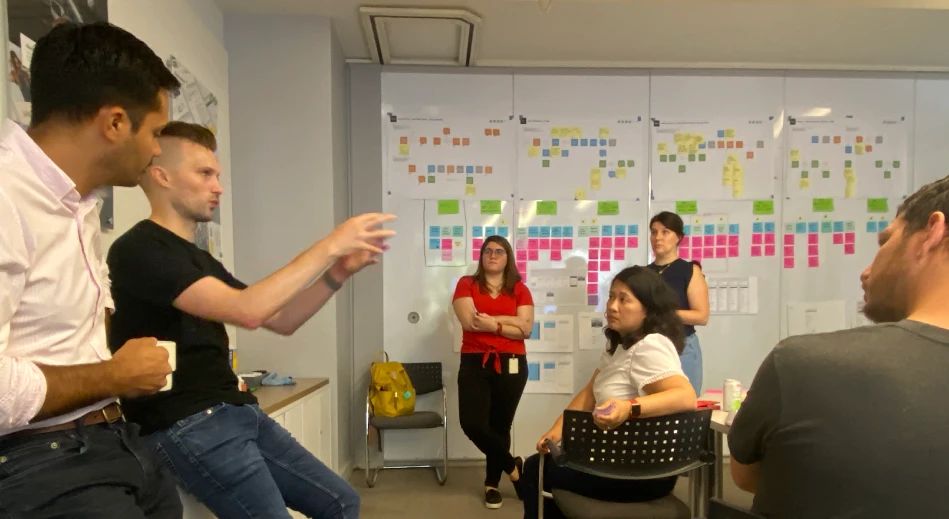
Shared journey walls and structured synthesis helped teams turn research, observations and delivery constraints into common priorities.

Visual working sessions made assumptions, flows and solution options explicit so teams could align before committing to detailed design.
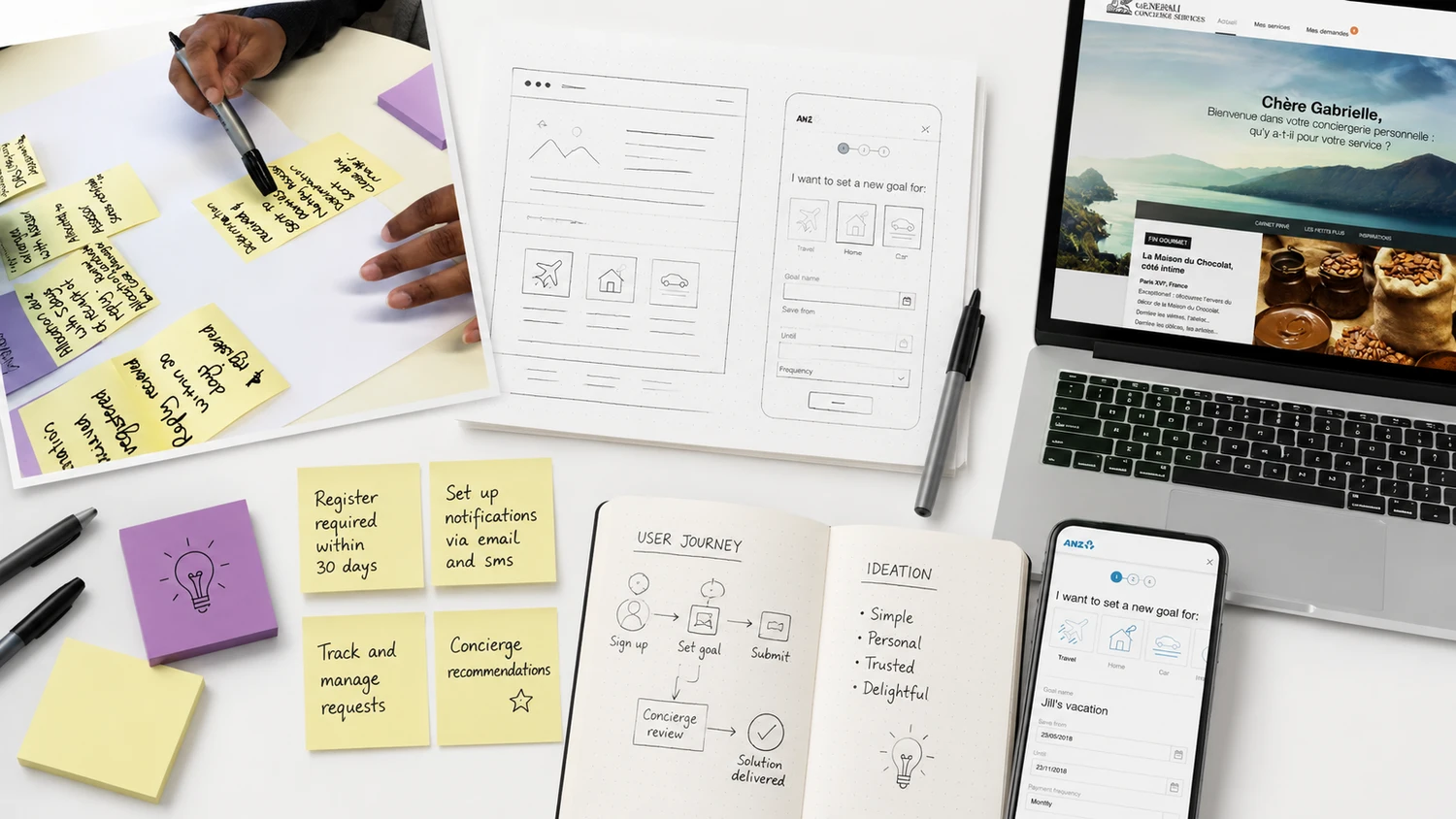
A consistent toolkit of research, journey mapping, prototyping and design-system practices helped teams apply design more reliably across different types of work.
The opportunity
A design-leadership case study focused on strengthening design capability, creating more consistent practice and improving how design contributes to delivery.
My contribution
I helped define the capability model, ways of working and practical artefacts needed to make design more consistent, scalable and influential.
Context and challenge
As design teams grow, inconsistency in methods, artefacts, governance and collaboration can reduce impact. Teams often need stronger shared ways of working so design can contribute more clearly and credibly across strategy and delivery.
The challenge was to strengthen capability without creating heavy process or slowing teams down.
My role
- Assessed current practice and team needs.
- Defined capability priorities and a practical transformation roadmap.
- Developed shared methods, templates and ways of working.
- Supported design governance, coaching and capability uplift.
- Connected capability work to real delivery needs rather than abstract maturity models.
Strategic and design leadership response
Create a practical capability model
The work focused on what teams actually needed to deliver well: clearer methods, stronger collaboration, more consistent artefacts and a better connection between design and delivery.
Build consistency without bureaucracy
Shared principles, templates and governance were designed to support teams, not constrain them.
Lift capability through practice
Coaching, mentoring and real-project application helped the capability work become embedded rather than remaining theoretical.
Outcome and impact
- Stronger design ways of working.
- Improved consistency across artefacts and delivery practice.
- Greater clarity around how design contributes to outcomes.
- A more scalable and sustainable design capability.
Why it matters
Design leadership is not just about directing work. It is about creating the conditions in which good work can happen consistently across a team or organisation.