Service Design
Employee Offboarding Experience
Improving the employee offboarding experience
A local-government employee-experience redesign focused on making offboarding less manual, more coordinated and clearer for both employees and internal teams.
Selected project evidence
The work behind the outcome.
Research, journeys, prototypes and delivered outputs selected to show how the project moved from evidence to decision and delivery.
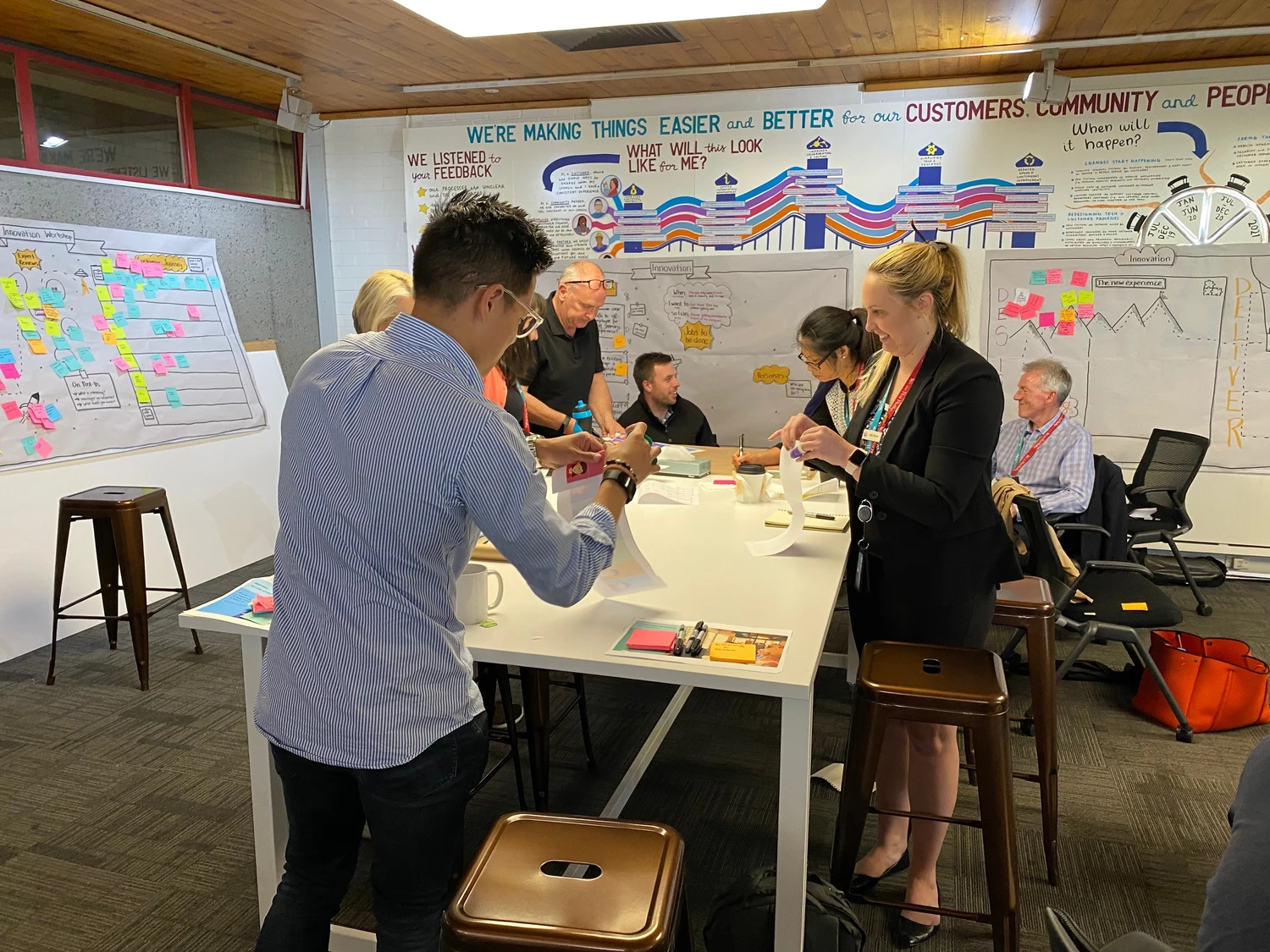
Council teams worked together to identify ownership gaps, failure points and the moments that mattered across the offboarding service.
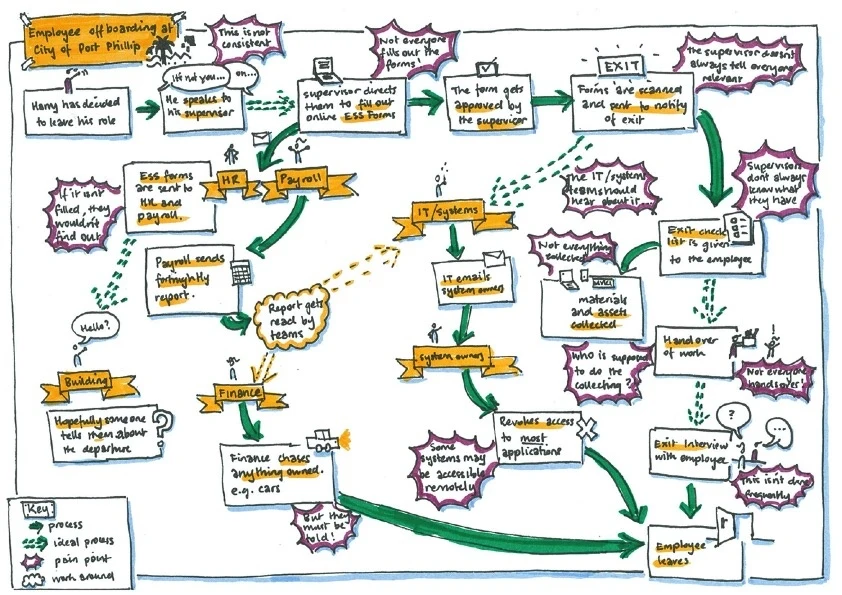
The journey map made a highly manual process visible, including hand-offs, responsibilities, workarounds and security or privacy risks.
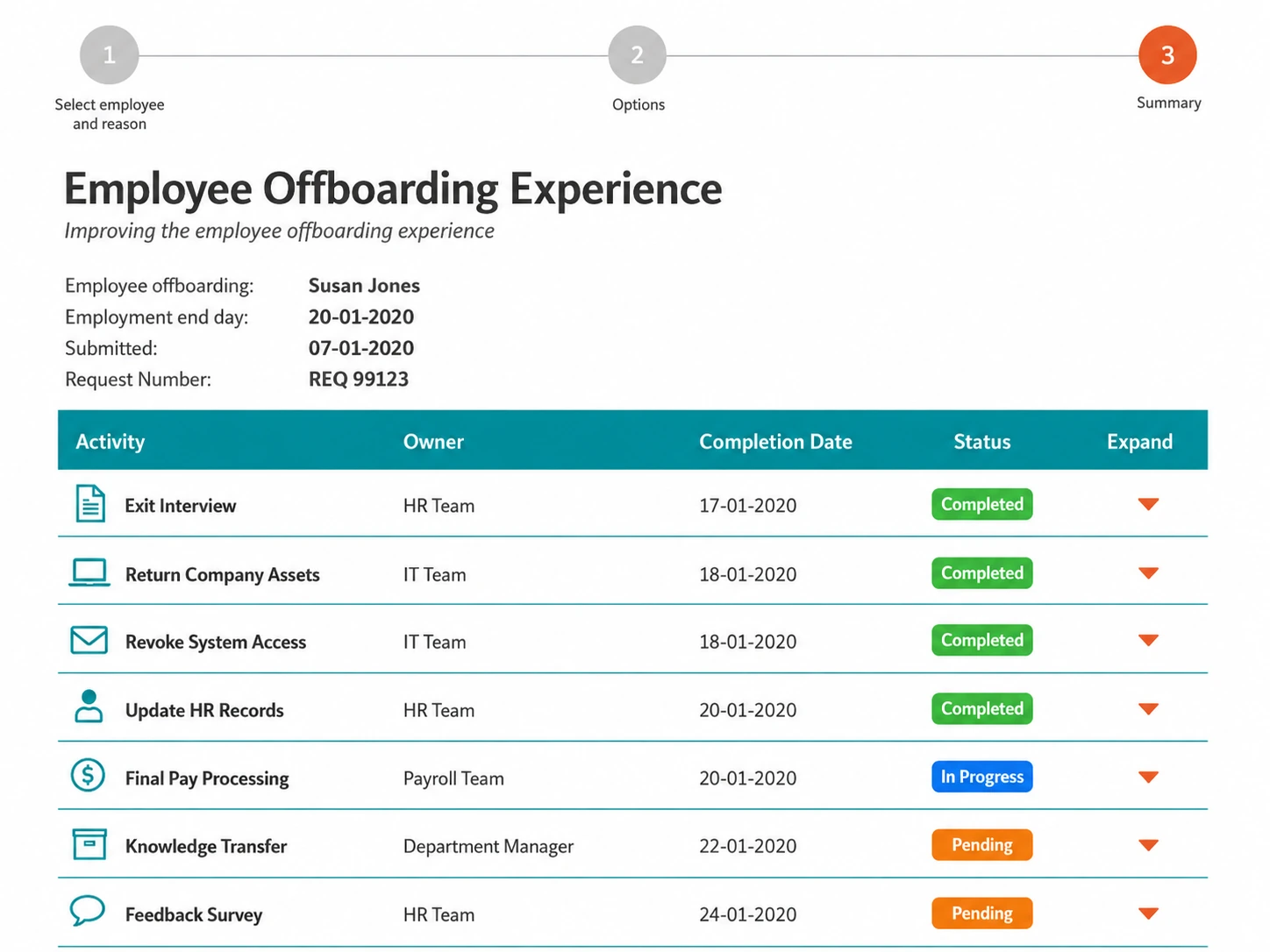
The full prototype view shows the employee experience together with assigned activities, completion dates and status without removing screen elements.
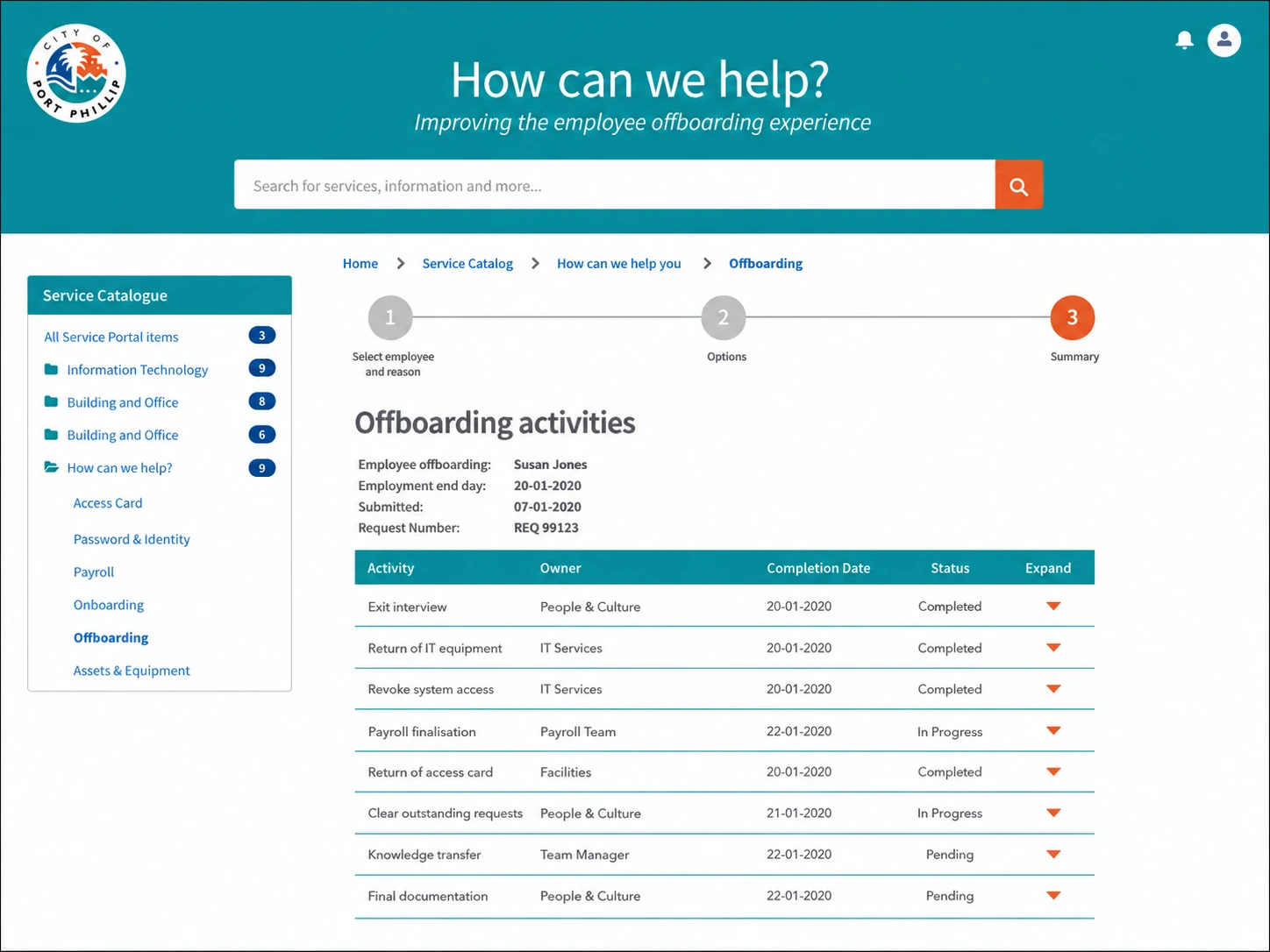
A complete white-background service screen shows the activity list, owners, timing and status used to make internal accountability clearer.
The opportunity
A local-government employee-experience redesign focused on making offboarding less manual, more coordinated and clearer for both employees and internal teams.
My contribution
I worked with a cross-functional council team to map the offboarding journey and touchpoints, co-design a clearer future process and prototype the end-user flow for stakeholder validation.
Context and challenge
A Victorian local council wanted to improve its employee offboarding experience. The existing process was highly manual and poorly defined, with unclear ownership and governance.
Miscommunication between teams created avoidable friction and increased security and privacy risk at the point employees left the organisation.
My role
- Worked with a cross-functional council team to understand the existing offboarding process.
- Mapped the employee journey and the internal touchpoints behind it.
- Facilitated co-design to identify a clearer future process.
- Created a prototype showing the process from the end-user point of view.
- Supported stakeholder playback, validation and buy-in.
Strategic and service design response
Make the whole process visible
Journey and process mapping exposed where ownership, communication and hand-offs were breaking down across the organisation.
Design the employee and organisational experience together
The work considered what the departing employee needed alongside the internal actions required across teams, rather than treating offboarding as a checklist owned by one function.
Prototype the future process
The co-designed future state was translated into an end-user prototype so stakeholders could see how the process would work and validate the direction before implementation.
Outcome and impact
- A clearer future-state offboarding journey.
- Improved visibility of ownership and cross-team hand-offs.
- A prototype showing the end-user process from start to finish.
- Broader stakeholder validation and buy-in for the proposed direction.
Why it matters
Employee offboarding is both an experience and a risk-management service. Making the journey visible helped the organisation address employee needs while also reducing the ambiguity that created security, privacy and governance risk.