
Product and Service Design
Kraft Heinz Field Sales
Redesigning field sales around the reality of the store visit
A field-sales transformation across Australia and New Zealand, designed around real store visits rather than existing software workflows.
Selected project evidence
The work behind the outcome.
Research, journeys, prototypes and delivered outputs selected to show how the project moved from evidence to decision and delivery.
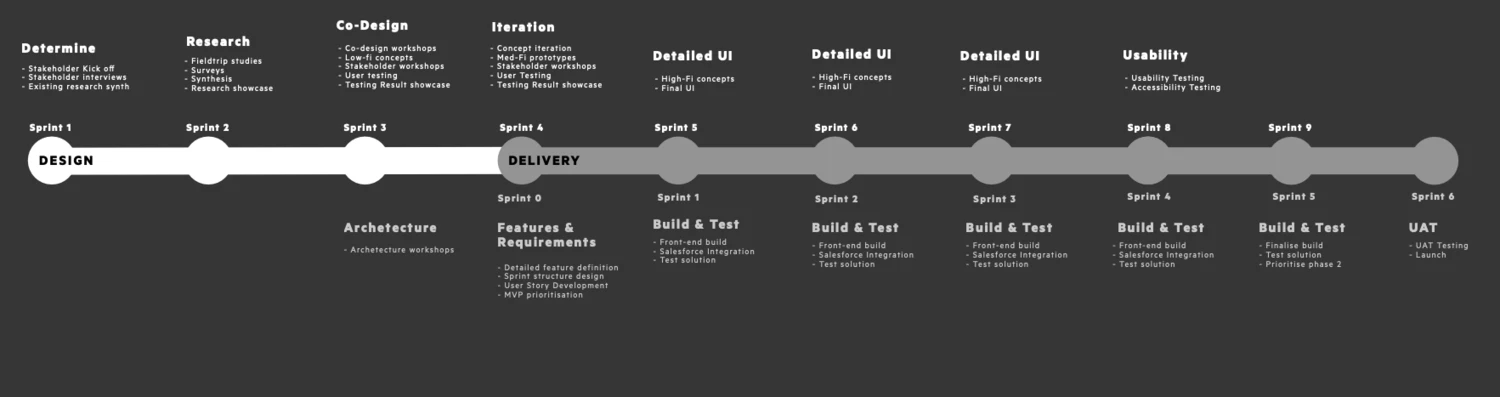
A phased roadmap showed how discovery, co-design, iteration, detailed UI, build and test were sequenced across the field-sales transformation.
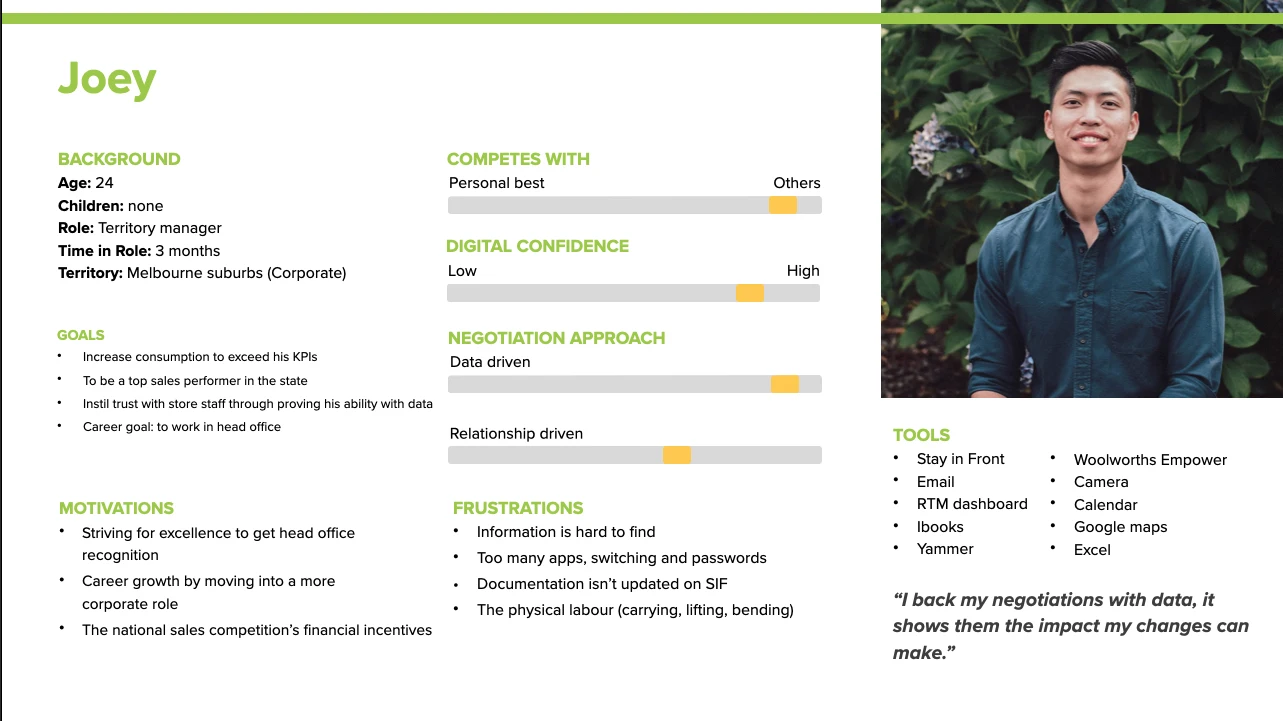
The Joey persona captured goals, tools, behaviours and frustrations to keep the future service grounded in the reality of store visits.
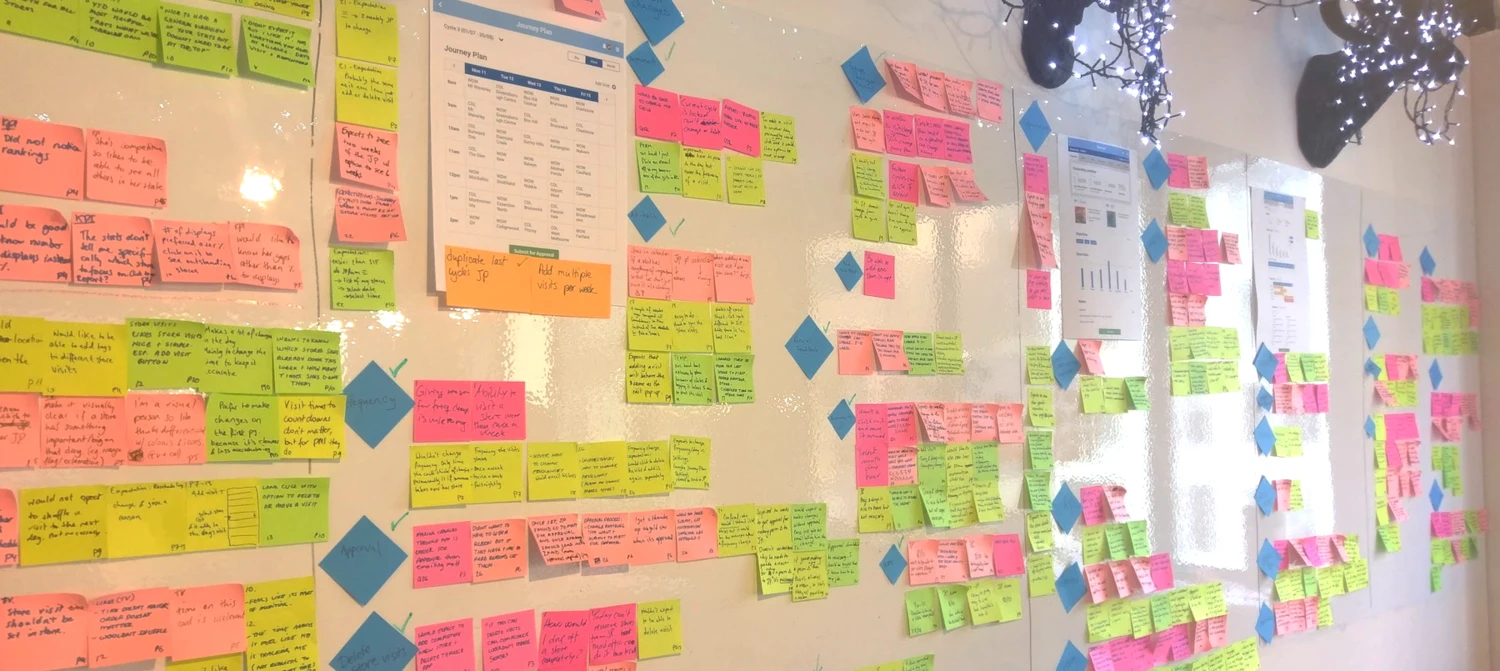
Collaborative workshops translated field observations into prioritised opportunities, task flows and product concepts.
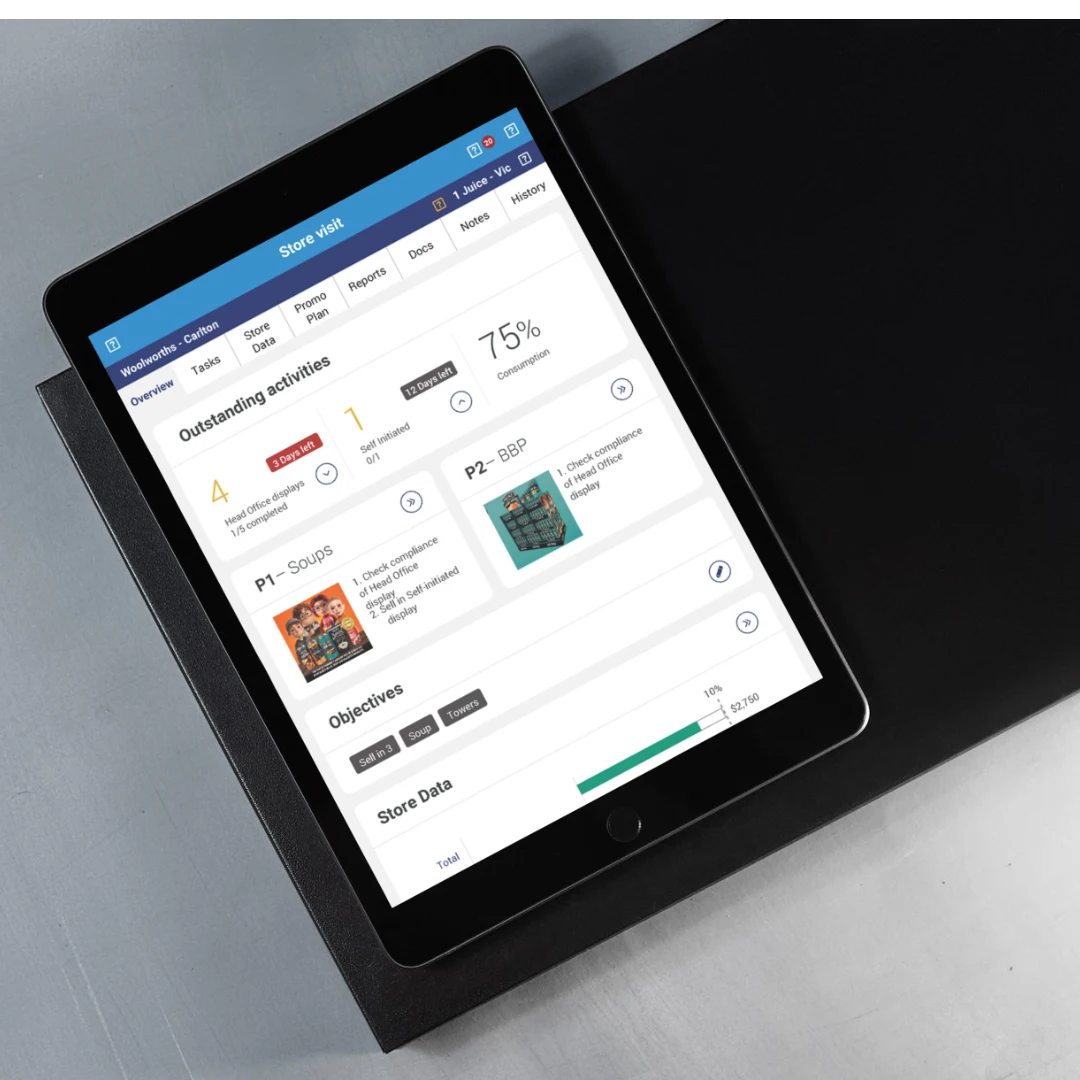
The product concept consolidated core store-visit tasks, objectives and compliance information into a single tablet experience.
The opportunity
A field-sales transformation across Australia and New Zealand, designed around real store visits rather than existing software workflows.
My contribution
I led contextual research, journey and process mapping, co-design, information architecture, prototyping and collaboration with Salesforce and integration teams.
Context and challenge
Kraft Heinz was aligning sales operations across Australia and New Zealand and needed to improve how information moved between field teams and head office. Sales representatives were working across multiple tools, documents and data sources while managing store visits, promotions, compliance and reporting. The previous solution created bottlenecks and did not support the workflows people actually used in stores.
My role
- Led an eight-week discovery and product-definition phase using contextual observation, interviews, surveys and workshops.
- Observed field representatives in real store environments.
- Conducted interviews and surveys.
- Mapped visit types, workflows and information needs.
- Facilitated co-design across Australia and New Zealand.
- Designed information architecture and prototypes.
- Worked with Salesforce and integration teams.
Strategic and service design response
Observe the work in context
Field research exposed visit patterns, operational constraints and differences that were invisible in process documentation.
Simplify the workflow before the interface
The end-to-end visit was redesigned so the product could remove complexity rather than simply place existing processes into one app.
Prioritise real-time and offline needs
The service prioritised essential sales data, promotions, task management and resilience when connectivity was poor.
Connect field and back office
Information captured in the field was designed to improve reporting, follow-up and visibility across the organisation.
Outcome and impact
- Reporting time reduced by 40%.
- Promotional compliance improved by 25%.
- Sales performance increased by 15%.
- More than 100 sales representatives were supported through one consolidated service.
Why it matters
The value came from designing around the work, not the software. Understanding the full field-sales service allowed the team to remove friction and support better decisions in the moment.