
Product and Service Design
Telstra Assurance Support Experience
Making online support easier to find, understand and use
The Assurance work focused on a simple business problem with a significant customer impact: an online troubleshooting tool could help customers, but too many people could not find it or know where to start.
Selected project evidence
The work behind the outcome.
Research, journeys, prototypes and delivered outputs selected to show how the project moved from evidence to decision and delivery.
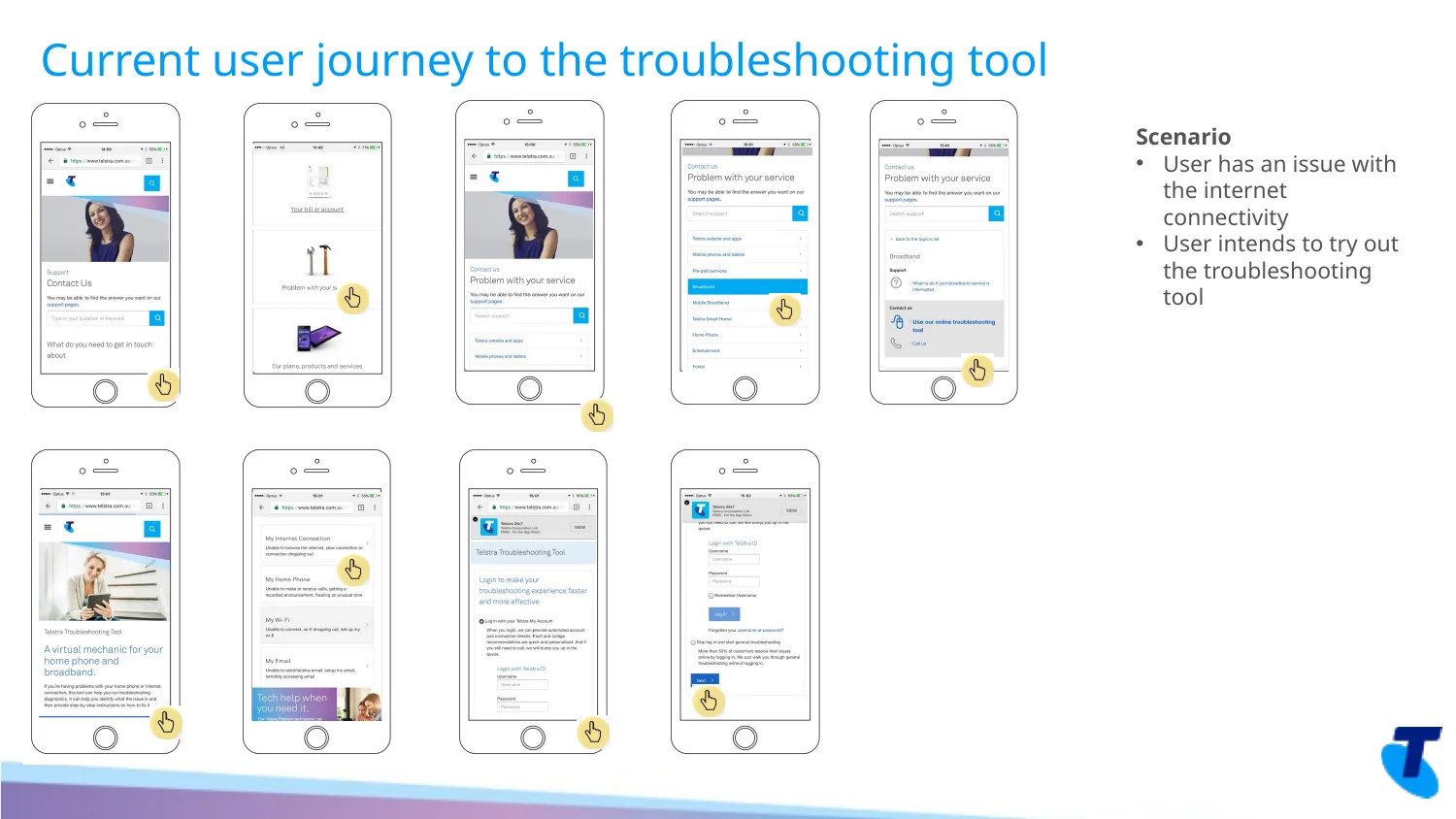
The current journey showed the number of steps and entry points customers moved through before reaching the online troubleshooting tool, making findability and support-channel friction visible.
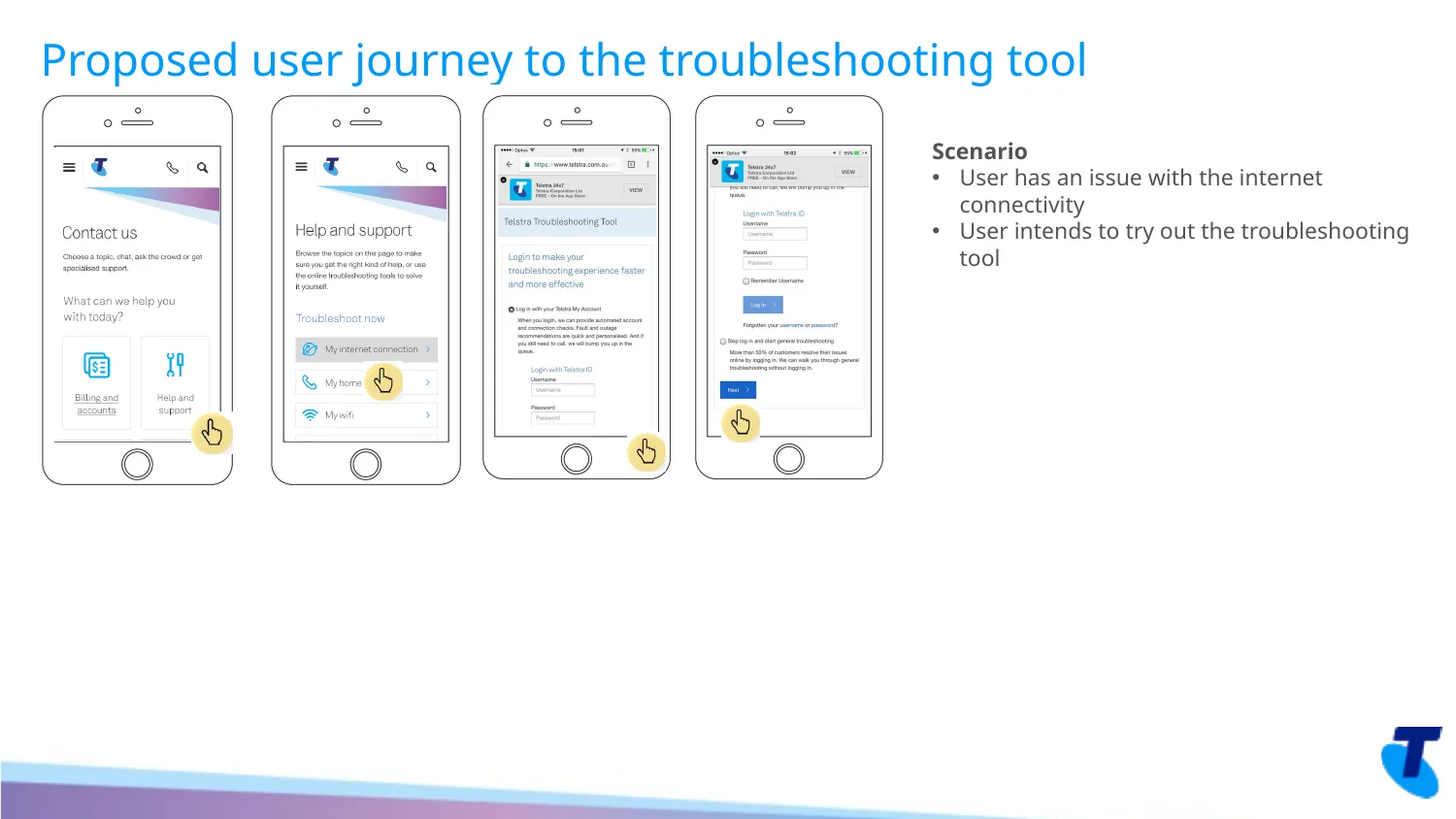
A proposed journey simplified how customers reached troubleshooting support and reduced unnecessary navigation before they could start resolving an issue.
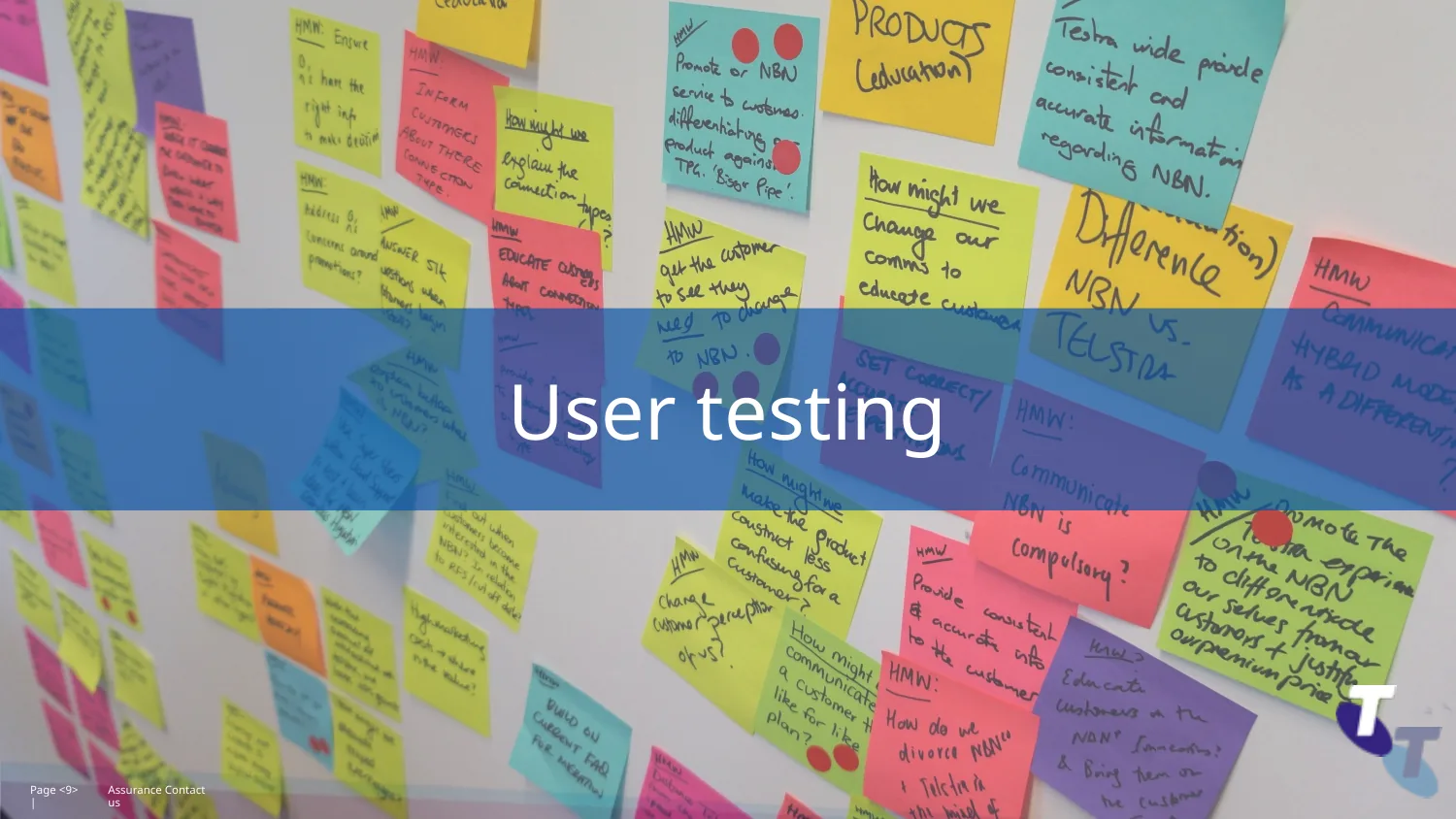
Iterative user testing combined observed behaviour, customer feedback and synthesis to test whether the new support pathways were easier to understand and use.
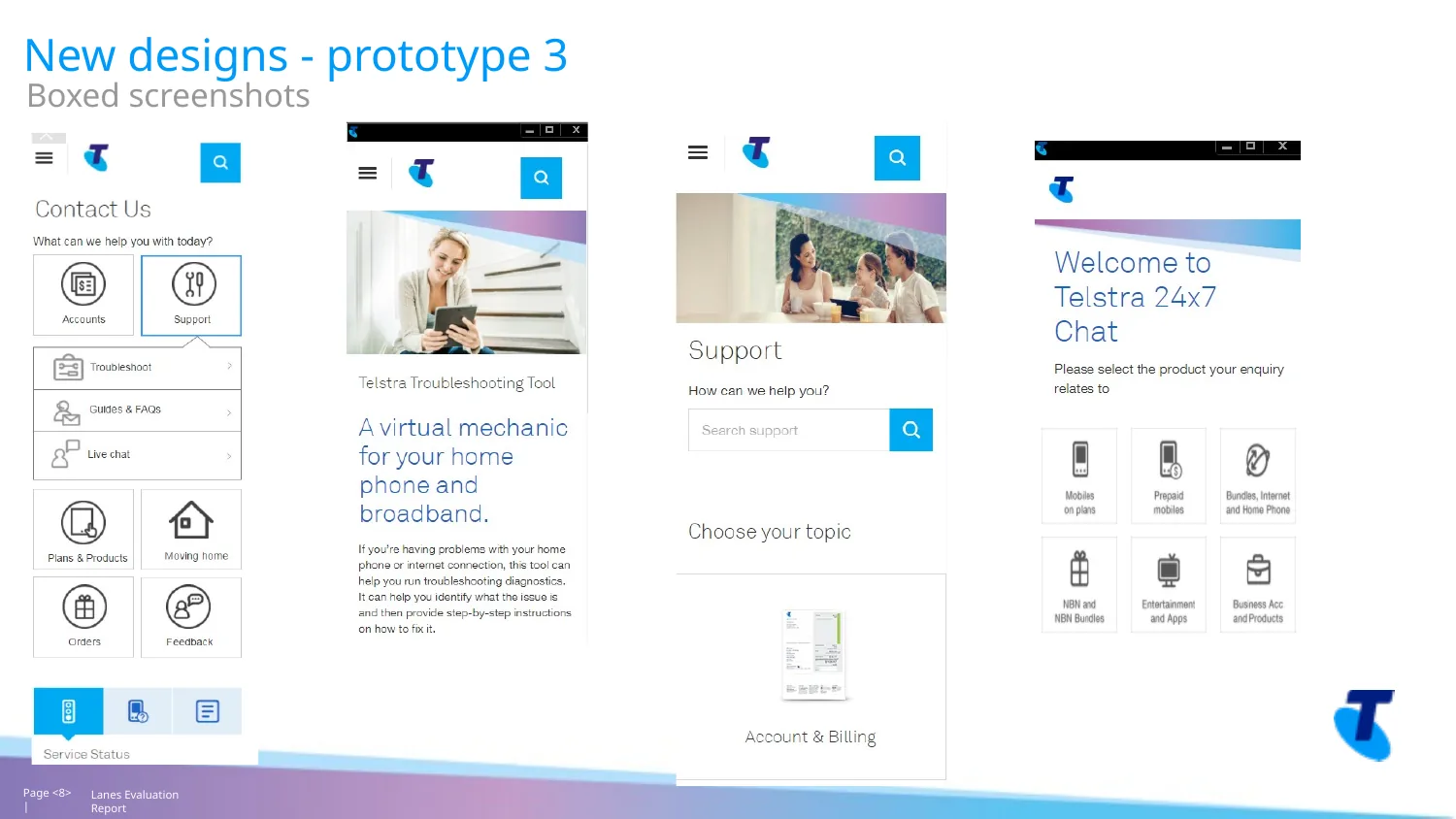
The prototype translated research into a clearer mobile support experience, bringing troubleshooting, search and support options into a more coherent flow.
The opportunity
The Assurance work focused on a simple business problem with a significant customer impact: an online troubleshooting tool could help customers, but too many people could not find it or know where to start.
My contribution
I helped lead research, journey analysis, iterative user testing and mobile-first concept design across Contact Us and Help & Support, translating what customers did and struggled with into a clearer route to troubleshooting and human support.
Context and challenge
Telstra wanted to increase use of its online troubleshooting capability and reduce avoidable calls. The project material showed that customers often did not use the tool because they could not find it or did not know it existed, even though feedback was positive once people reached it.
The Contact Us and Help & Support areas were therefore critical entry points. The source material also identified a strong mobile context, with a large share of support traffic coming from mobile devices, making a mobile-first redesign important.
My role
- Mapped how customers currently searched for help and moved between support channels.
- Used research to understand what made online self-service feel useful, trustworthy or frustrating.
- Tested alternative journeys, navigation and support entry points with customers.
- Iterated mobile-first prototypes for Contact Us and support.
- Worked through the relationship between troubleshooting, search, live chat, phone support and specialised contact options.
- Translated testing into recommendations for the next design iteration.
What we learned
Customers wanted a clear place to start
Research showed that many customers did not know where to begin when trying to solve an issue online. Entry points were difficult to find and the volume of support content could overwhelm people.
Guided support reduced effort
Step-by-step guidance and more specific troubleshooting content were valued because they helped customers narrow down the problem rather than read through large amounts of generic information.
Self-service still needed human support
Customers wanted live chat or another obvious route to a person when self-service could not resolve the problem. The goal was not to hide human support, but to make the transition between digital and assisted support more coherent.
Design response
The design work simplified the route into troubleshooting, improved the support journey, explored better search and navigation, and tested how contact options should appear when customers still needed help.
Rather than treating Contact Us as a directory of channels, the experience was reframed around helping the customer solve the problem with the least unnecessary effort.
Outcome
- A clearer current-state view of where customers were getting lost or giving up.
- Iteratively tested recommendations for search, navigation, live chat and troubleshooting entry points.
- A mobile-first prototype showing a simpler route from support need to resolution.
- A stronger basis for increasing useful self-service without making assisted support harder to access.
Why it matters
Digital support only reduces effort when customers can find it, understand it and trust that it is relevant to their problem. The Assurance project treated discoverability, guidance and hand-off as one service journey rather than separate interface components.