
CX Strategy
Voice of the Customer
Turning customer feedback into an improvement system
A Voice of Customer model connecting customer feedback, journey performance and service priorities rather than treating insight as a reporting exercise.
Selected project evidence
The work behind the outcome.
Research, journeys, prototypes and delivered outputs selected to show how the project moved from evidence to decision and delivery.
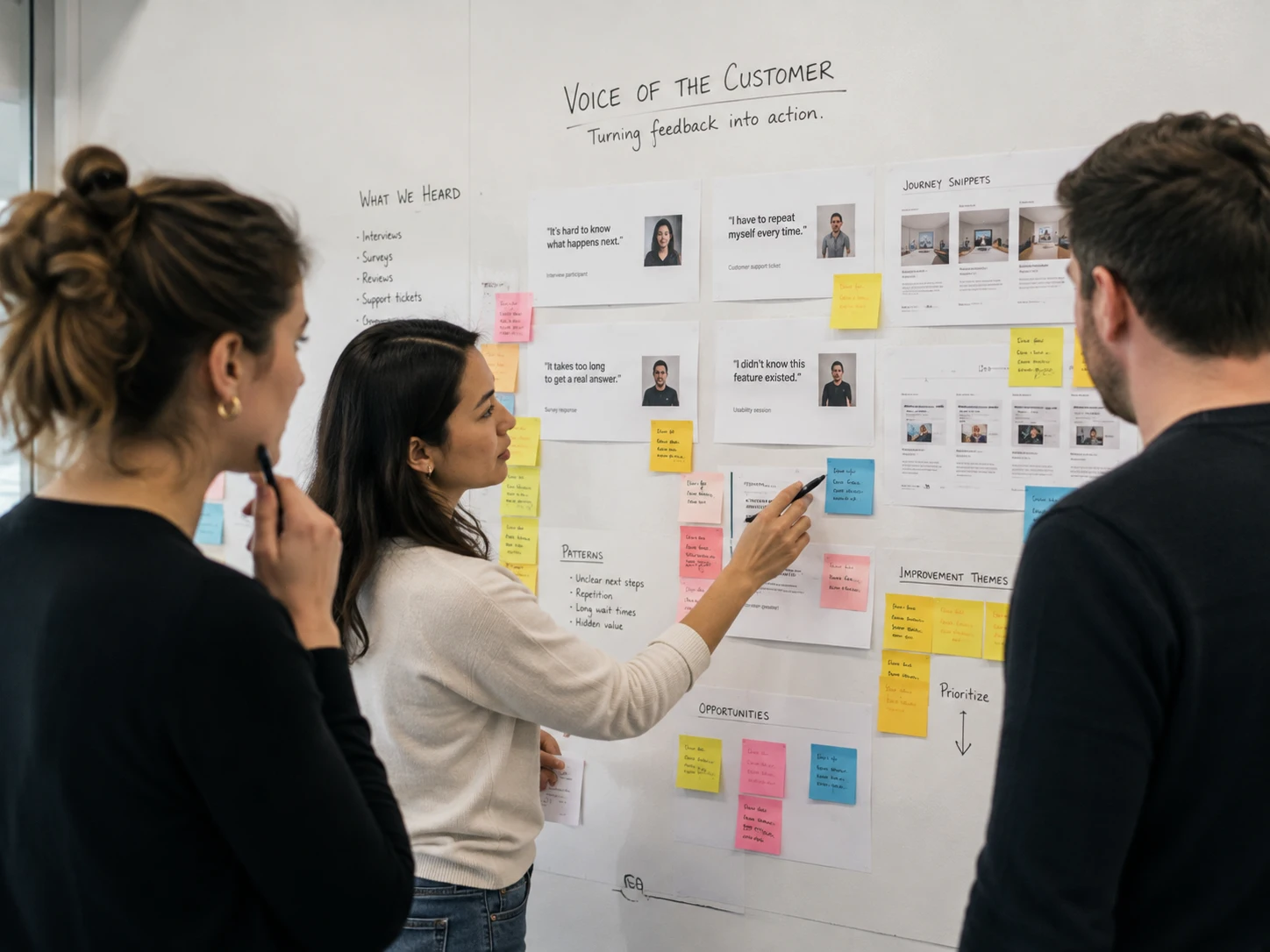
Customer comments, research and journey evidence were brought together in collaborative synthesis so teams could see recurring patterns rather than isolated survey responses.
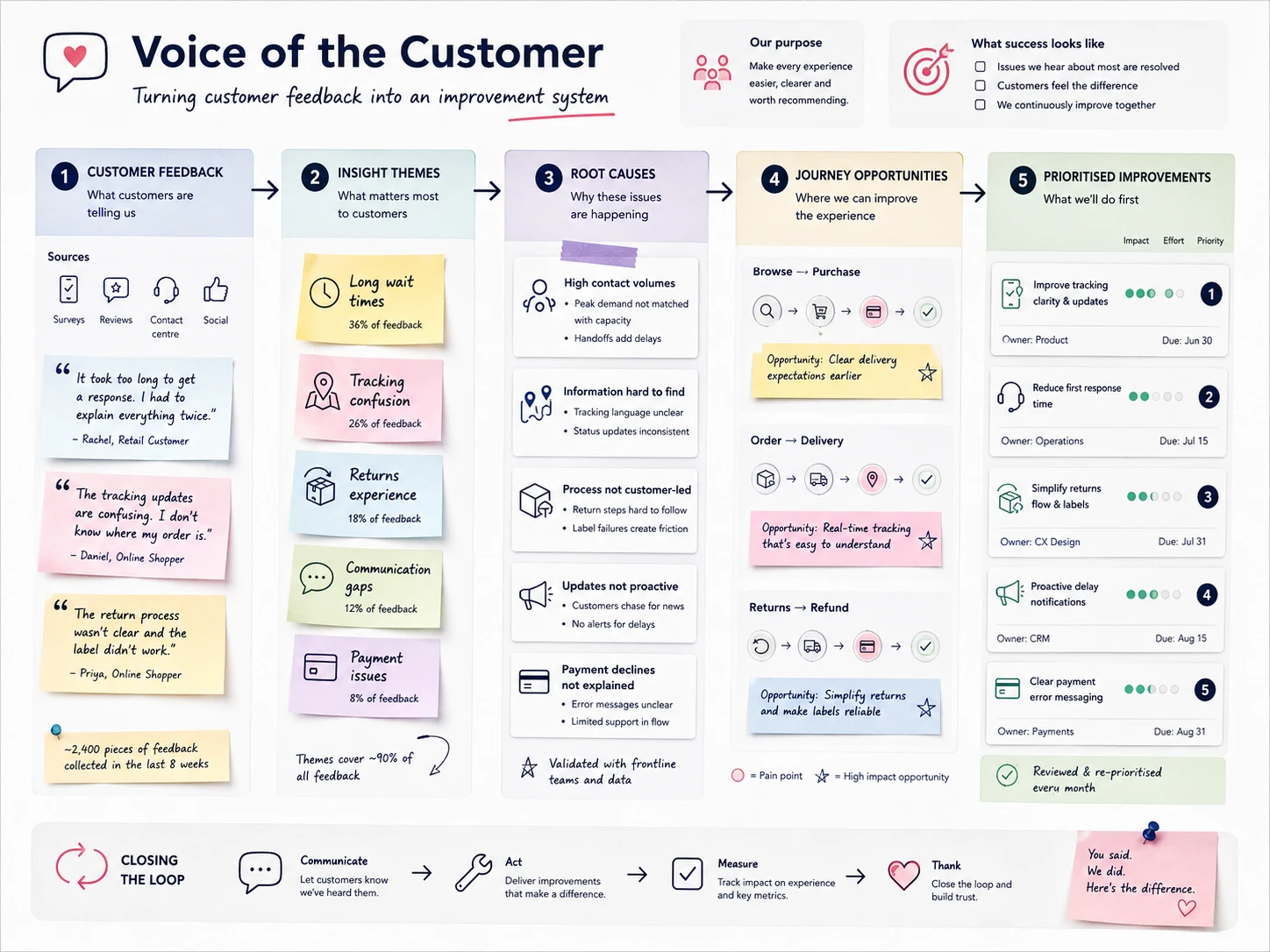
The operating model translated customer signals into root causes, prioritised opportunities, design responses, validation and ongoing measurement so feedback could drive decisions.
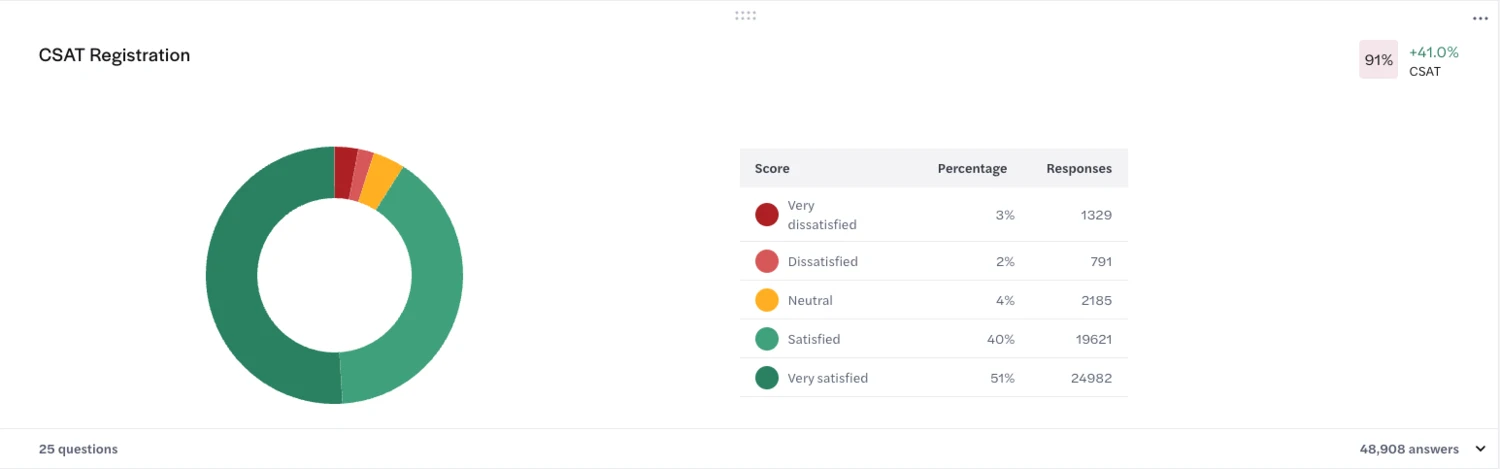
Journey-level CSAT provided a clear outcome measure and helped teams see whether service improvements were producing a materially better customer experience.
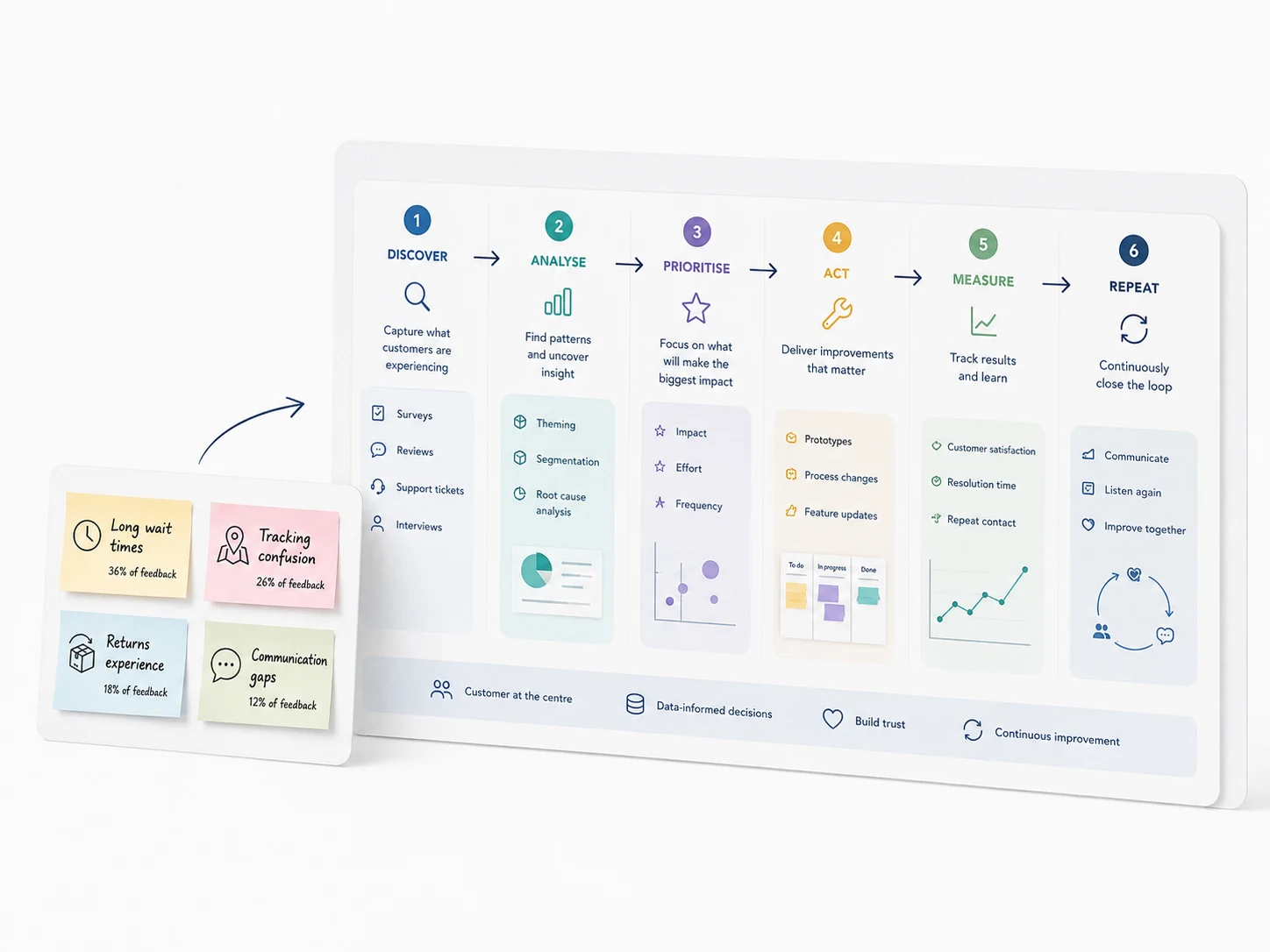
A simplified flow connected customer feedback, theme clustering, prioritisation and improvement planning so teams could turn evidence into a repeatable action system.
The opportunity
A Voice of Customer model connecting customer feedback, journey performance and service priorities rather than treating insight as a reporting exercise.
My contribution
I designed the measurement and feedback loop around customer journeys and helped teams translate evidence into prioritised service improvements.
Context and challenge
Customer feedback existed across contact-centre complaints, web analytics, project research and local operational data, but there was no consistent way to connect those signals to a shared journey view.
Teams could see symptoms, but it was difficult to compare journeys, understand root causes or agree where investment would have the greatest impact.
My role
- Aligned digital, customer-service and technology stakeholders.
- Mapped priority customer journeys.
- Introduced CSAT, ease and findability measures at meaningful journey points.
- Combined surveys, interviews, behavioural data and service-demand evidence.
- Prioritised improvement opportunities and validated design responses.
Strategic and service design response
Measure journeys, not isolated touchpoints
Measures were organised around customer tasks and journeys so teams could see when a poor result at one touchpoint was caused by an earlier information or process failure.
Combine quantitative and qualitative evidence
Scores showed where customers struggled. Research explained why. The program deliberately combined satisfaction, ease, findability, behavioural data, interviews and assisted-channel evidence.
Create a feedback-to-action loop
The model connected signal → root cause → journey opportunity → design response → validation → measurement. This made insight useful to delivery teams rather than leaving it in dashboards.
Outcome and impact
- A more consistent approach to measuring customer experience across priority services.
- Stronger evidence for prioritising digital and service improvements.
- Customer feedback became a more regular input into transformation decisions.
- The broader program contributed to increased digital adoption and reduced assisted-channel reliance across key services.
Why it matters
Voice of Customer programs create little value if they stop at reporting. The important design work was the organisational loop around the data: who sees it, how it is interpreted, how priorities are set and how teams know whether an intervention worked.